
Every advertisement you have seen for citizenship by investment is selling you the wrong product. Yacht photos. Sunset over a Caribbean beach. Words like “freedom” and “unlock” and “sophisticated.” The pitch is that you are buying a lifestyle upgrade, a luxury status symbol, a Plan B for some vague future emergency.
The actual buyers, the ones writing the $250,000 to $1 million checks, are not buying lifestyle. They are buying a financial instrument.
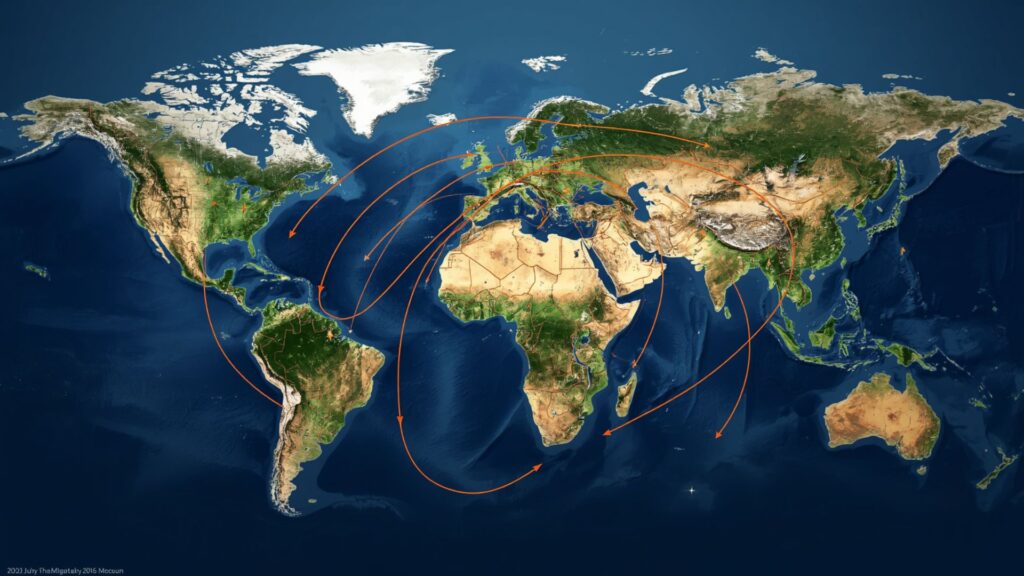
In 2025, a record 142,000 millionaires relocated across borders. The 2026 forecast is 165,000, the largest migration of wealth on record. UK nationals filed 183% more applications for alternative residency and citizenship in Q1 2025 than the year before. German enquiries for alternative residence rose 114% between 2023 and 2024. American applications hit record levels. These are not people chasing a lifestyle. They are people solving specific, expensive problems that their first passport cannot solve.
Below are the real reasons HNWI families buy second citizenships in 2026. Almost none of them appear in the brochures.
Reason 1: Banking Access
This is the single most common reason wealthy families from certain jurisdictions buy second citizenship, and it is almost never advertised.
The problem your first passport creates
If you hold a Russian, Belarusian, Iranian, Lebanese, Pakistani, Nigerian, or in some banking contexts even an Indian or Turkish passport, opening international bank accounts is not a paperwork formality. It is a structural problem. Major banks in Switzerland, Singapore, the UAE, the United Kingdom, and the United States have either restricted or refused account opening for holders of certain passports outright, regardless of the applicant’s source of funds, education, business standing, or net worth.
This is not theoretical. After the 2022 sanctions wave, Russian nationals with even partial connections to sanctioned individuals saw accounts frozen across European banks. Iranian nationals have been functionally locked out of Western banking for years. Lebanese citizens, since the 2019 banking collapse, struggle to move their own money out of a country that legally restricts withdrawals from local accounts. The list goes on.
How a second citizenship actually solves this
A second citizenship from a clean, well-regulated jurisdiction (a Caribbean program with strong due diligence, the UAE Golden Visa for residency-based banking, or an EU Golden Visa for European banking access) gives you a passport that financial institutions are willing to onboard without the structural friction your first passport creates.
Practical example: a Lebanese entrepreneur with a profitable trading business and $3 million in assets cannot open a Singapore bank account in 2026 with only a Lebanese passport. With a St. Kitts and Nevis passport, the same applicant submits the same documentation and is onboarded within four to six weeks. The citizenship cost him $250,000. The functional difference, the ability to operate his business globally rather than be locked into a collapsed local banking system, is worth multiples of that to him.
This is not a luxury. It is access to the basic financial infrastructure that holders of US, Swiss, German, or British passports take for granted.
Reason 2: Legal Tax Residency Optimization
The second largest motivation, especially for entrepreneurs preparing for a major business exit or executives with significant international income.
Citizenship and tax residency are different things
This is the most misunderstood point in the entire industry. A second citizenship does not, by itself, change your tax residency. You can hold a St. Kitts passport and still be a US tax resident. You can hold a Portuguese passport and still owe taxes to your original country.
What citizenship and residency programs do is open the door to a different tax residency, which you then have to physically and legally establish. The combination is what produces the tax outcome, not the document alone.
How wealthy entrepreneurs actually use this
The structure that works in 2026 typically looks like this. An entrepreneur expecting a $20 million business exit relocates to a low-tax or zero-tax jurisdiction (the UAE, Monaco, or in some structures the Bahamas) two to three years before the exit, establishes genuine tax residency under that country’s rules, and exits the business as a tax resident of the new jurisdiction. The capital gains tax saved on a $20 million exit, depending on the original jurisdiction, can range from $4 million to $7 million. The cost of the UAE Golden Visa setup, the property purchase, and the supporting structure is a small fraction of that saving.
Practical example: an Indian software founder planning a 2028 exit moves to Dubai in late 2025, qualifies for the UAE Golden Visa through a $545,000 property investment, establishes tax residency by spending more than 183 days per year in the UAE, and times his company exit for after his Indian tax residency has lapsed. UAE imposes no personal income tax, no capital gains tax on personal investments, and no wealth tax. The exit is structured cleanly, in compliance with both jurisdictions, with multimillion-dollar tax savings as a direct result of the residency program.
Portugal’s research-focused tax incentive (the current iteration of the former NHR regime) and Greece’s Non-Dom flat-tax structure offer parallel structures for entrepreneurs willing to spend significant time in Europe. The instrument is not the passport. The instrument is the legal tax residency the program enables.

Reason 3: Political Risk Insurance
The closer a buyer’s wealth is to political power, regulatory uncertainty, or geopolitical fault lines, the more urgent this reason becomes.
What political risk actually looks like
Political risk is not the dramatic version (a coup, a confiscation, a flight in the middle of the night). The actual risk pattern that drives HNWI families is slower and more bureaucratic: a sudden regulatory change that strands your assets, a sanctions wave that catches you in a category you did not realize you belonged to, an exchange-control regime that prevents you from moving your own money, a tax retroactivity that rewrites the rules on income you already earned and reported.
Russian HNWIs in 2022 were not all politically connected. Many were ordinary entrepreneurs whose accounts were frozen because their bank applied a blanket policy after sanctions. Iranian HNWIs in 2018 were not all regime-aligned. They woke up to a banking system that no longer worked for them. UK HNWIs in 2024 and 2025 watched the non-dom tax regime get dismantled and triggered the largest emigration of British millionaires on record.
Why a second citizenship is the actual hedge
A second citizenship gives you legal optionality. It is the right to enter, reside in, work in, and bank in another jurisdiction at any time, without needing permission, without applying for a visa under emergency conditions, without being subject to the specific risk pattern of your first passport. The citizenship does not need to be “used” to be valuable. It is insurance.
Practical example: a Hong Kong family with a $50 million business obtained Caribbean citizenship in 2020. They never relocated. Five years later, when capital controls and political conditions in their region tightened, they moved their banking, their education plans, and eventually their primary residence to a jurisdiction they had quietly secured access to half a decade earlier. The cost in 2020 was $250,000. The optionality it produced was the ability to act before others could.
Reason 4: Education and Generational Planning
This is the reason families with school-age children give once trust is built. They rarely lead with it because it sounds soft, but it often drives the decision.
What “education access” really means
EU citizenship lets your children attend any university in the European Union at the same tuition rates as local students. For top universities (Sorbonne, ETH Zurich, Bocconi, Trinity College Dublin, Karolinska), this is the difference between EU domestic fees of €0 to €4,000 per year and international fees of €15,000 to €40,000 per year. Across two children and four years of study each, the saving is €120,000 to €280,000 just on tuition, before factoring in residency rights, work permissions during studies, and post-graduation visa access.
US citizens, in particular, find this calculation compelling because their dollar buys substantially more European education for an EU-passport-holding child than it does at home. UK families, post-Brexit, are increasingly using EU residency programs specifically to restore the European university access their children lost in 2020.
Citizenship as a multi-generational asset
Most CBI programs grant citizenship that is inheritable. A child born to a Caribbean citizen is a Caribbean citizen. A grandchild born to that child is also a Caribbean citizen. The $250,000 spent today secures legal optionality for descendants who do not yet exist.
Practical example: a Nigerian family acquires Grenada citizenship through the National Transformation Fund. The family’s three children inherit the citizenship. Twenty years later, those children’s six grandchildren also inherit it, by birthright. The original $235,000 contribution has produced legally inheritable mobility, banking access, US E-2 Investor Visa eligibility, and education optionality for nine descendants. As a multi-generational asset, the cost-per-person is meaningful even if the original buyer never uses it.
This is the dimension that distinguishes citizenship from residency. A residence permit expires when you stop maintaining it. A citizenship persists, and passes down.
Reason 5: Business Mobility and Treaty Access
Less emotional than the others, but for entrepreneurs operating across borders, often the most concrete return on investment.
Visa-free travel as a business asset
A Lebanese entrepreneur with a Lebanese passport needs visas for roughly 130 destinations. A Lebanese entrepreneur with an additional St. Kitts passport needs visas for about 40. The reduction in friction, including the time saved on consular appointments, the deals attended, the partnerships maintained in person, is a direct business cost saving.
Caribbean passports from St. Kitts and Nevis or Grenada offer visa-free or visa-on-arrival access to roughly 150 to 156 destinations including the Schengen Area, the United Kingdom, Singapore, and Hong Kong. EU passports (post-naturalization through Portugal or Greece) offer visa-free access to roughly 190 destinations including the United States under the Visa Waiver Program.
Treaty-specific benefits some buyers specifically target
Grenada is the only Caribbean CBI country with both an E-2 Investor Visa Treaty with the United States and a visa-waiver agreement with China. Grenada citizens can apply for a non-immigrant US business visa to live and operate companies in the US, and can travel to mainland China without visas. For an entrepreneur whose business depends on access to both the US and China, the Grenada passport at $235,000 is functionally a $235,000 business operating license that no other Caribbean program offers.
Practical example: an Indian software founder selling SaaS into the US market obtains a Grenada passport, then applies for a US E-2 Investor Visa, opens a Delaware C-Corp, and operates his US sales subsidiary as a treaty investor without needing a green card or H-1B sponsorship. The Grenada citizenship is the structural enabler of a US business presence that his Indian passport could not access.

Who Actually Buys What
Different buyer profiles consistently match different programs. The pattern is consistent enough across thousands of files to describe accurately.
CIS and MENA entrepreneurs
Buying primarily for banking access, sanctions hedging, and family mobility. Typical choice: a Caribbean CBI (St. Kitts, Grenada, or Antigua) for the passport, often paired with a UAE Golden Visa for the operational residency base. Total budget $300,000 to $700,000 across both programs.
Indian and Chinese tech founders
Buying primarily for tax planning around an upcoming exit and for US business access. Typical choice: a UAE Golden Visa for the tax residency, sometimes paired with Grenada citizenship for the E-2 Investor Visa route. Total budget $600,000 to $900,000.
US, UK, and Western European HNWI families
Buying primarily for political hedging, EU education access, and tax planning. Typical choice: an EU Golden Visa (Portugal or Greece) for the long-term EU citizenship and tax residence, or an Italy or Latvia program for specific tax structures. Some additionally acquire a Caribbean passport as a faster mobility hedge while the EU clock runs. Total budget $500,000 to $1,500,000.
Ultra-high-net-worth families ($30M+ liquid)
Buying for generational resilience rather than any single problem. Typical choice: a structured portfolio of three to five programs: a Caribbean citizenship, an EU Golden Visa, a UAE Golden Visa, and often a US-track visa or a Swiss residence. Total budget $1,500,000 to $4,000,000. The point is layered access, not any single benefit.
What the 2026 Numbers Actually Look Like
The market for second citizenships and residencies has scaled to a level that makes the “luxury status symbol” framing structurally wrong.
- 142,000 millionaire relocations in 2025, projected 165,000 in 2026
- Roughly 25% to 30% of those relocations use formal investment migration programs (the rest use work, ancestry, family, or birthright routes)
- UAE projected to remain the top destination for HNWI inflows for the fifth consecutive year
- UK Q1 2025 applications for alternative citizenship up 183% year-over-year
- Germany 2024 enquiries up 114% year-over-year
- China projected highest net loss of millionaires in 2025, with 15,200 expected to leave
- 9 of the top 10 destinations for HNWI net inflows operate formal investment migration programs
These numbers describe a market behaving like financial diversification, not status consumption. People do not move 142,000 millionaires a year for a yacht photo.
Common Mistakes Buyers Make
If the thesis above is correct (that second citizenship is a financial instrument), then most buyer mistakes come from treating it like a luxury purchase instead.
Choosing based on which country is “prettier” or “more famous”
This is the most expensive mistake. Choosing St. Lucia over Dominica because the beaches look better, or choosing Portugal over Greece because of perceived prestige, ignores the actual problem the citizenship is meant to solve. The right question is not which country sounds nicest. It is which program produces the legal, financial, and operational outcome you need.
Not coordinating with a tax advisor before buying
A meaningful number of buyers acquire a second citizenship or residency, then discover six months later that their original country still considers them tax resident, or that the new country requires more physical presence than they planned to give. The citizenship was correct. The tax positioning around it was missing. Tax planning has to start before the program is selected, not after.
Buying for the brochure benefit instead of the actual benefit
“Visa-free travel to 156 countries” is a brochure benefit. The actual benefit is whether the specific countries you do business with are on that list. Many buyers travel to ten countries a year and could fit their entire travel pattern under a much cheaper program. Some buyers travel only to the EU and the US, and Caribbean visa-free coverage is therefore largely irrelevant to them, while the regulatory risk on Schengen access in 2026 to 2027 is very relevant.
Underestimating ongoing compliance
The investment is the loud number. The quiet costs are due diligence updates, real estate holding period requirements, fund maturity timelines, physical presence minimums for residency programs, and the legal and accounting work required to maintain compliance over five to ten years. Total ongoing cost over a decade can equal 30% to 50% of the original investment. Any program assessment that ignores this number is incomplete.

How to Actually Decide
If second citizenship is a financial instrument, the right way to evaluate it is the same way a CFO evaluates any major capital allocation. Start with the outcome, not the product.
The four questions that produce the right answer
First, what specific problem are you solving? Banking access, tax planning, political hedging, education, mobility, or some combination. Be specific. “More options” is not a problem statement.
Second, what is the minimum solution that solves it? If your problem is banking access only, a Caribbean CBI is sufficient. If your problem is multi-generational EU citizenship, only an EU Golden Visa works. Buying more program than you need is overpaying.
Third, what is the regulatory risk on the program you are considering? Caribbean CBI in 2026 carries Schengen visa-free risk. EU Golden Visas carry redesign risk under EU Court pressure. UAE Golden Visa carries minimal regulatory risk currently. Price the risk into the decision.
Fourth, what is your timeline? If you need a passport in six months, only Caribbean CBI delivers it. If you have five to seven years, EU Golden Visa pathways become viable. The timeline filters the menu before any other consideration.
Frequently Asked Questions
Is buying a second citizenship legal?
Yes. Citizenship by investment programs are sovereign legislation passed by national parliaments, regulated by national authorities, and recognized internationally. The programs operating in 2026 (Caribbean five, Antigua and Barbuda, Dominica, Grenada, St. Kitts and Nevis, St. Lucia; plus Egypt, Jordan, North Macedonia, Nauru, Sao Tome and Principe, Turkey) are legally established and audited. EU Golden Visa residency programs in Portugal, Greece, Italy, and Latvia are similarly regulated by their national governments. Whether your home country requires you to declare a second citizenship is a separate question, and varies by jurisdiction.
Will my home country tax me on my second citizenship?
Citizenship alone does not create a tax liability anywhere. Tax residency does. The United States is the most aggressive case: US citizens are taxed on worldwide income regardless of where they live, so a second citizenship for a US citizen does not change US tax obligations unless the citizen formally renounces. Most other countries tax based on residency, so changing your tax residency through a residency program (paired with the physical presence required by that country’s rules) is what produces tax outcomes.
Do I have to live in the country to keep my citizenship or residency?
Depends on the program. Caribbean CBI citizenships do not require relocation, although a 30-day physical presence requirement within the first five years is being implemented under the new ECCIRA framework in 2026. Portugal Golden Visa requires an average of seven days per year. Greece Golden Visa has no minimum stay. UAE Golden Visa requires you to enter the UAE at least once every six months to keep the visa active, though the new rules allow extended absences without losing residency status. EU citizenship, once obtained through naturalization, requires no ongoing presence.
Is this only for the ultra-rich?
No, but it is for buyers who can deploy a significant amount of capital they do not need for daily liquidity. The cheapest entry into a meaningful program in 2026 is a Caribbean CBI starting at $200,000 plus due diligence and family fees, total budget around $260,000 to $300,000 for a single applicant. Below that, programs become either limited (Sao Tome at $95,000, Nauru at $130,000) or substantially less useful in the ways most buyers actually care about. Anyone treating a $250,000 to $1.5 million investment as a casual decision is the wrong buyer profile for the product.
How long does it actually take?
Caribbean CBI: typically four to six months from filing to passport, with St. Kitts and Nevis offering accelerated processing in roughly sixty days for an additional fee. UAE Golden Visa: two to eight weeks once documentation is complete. Portugal Golden Visa: 12 to 18 months for the initial AIMA residence card under current backlog conditions, with the citizenship clock starting at application submission. Greece Golden Visa: typically six to ten months for the residence permit. None of these include the three to four weeks of preparation needed before any clock starts.
What if I do not actually need the passport, but want options just in case?
That is the most common HNWI buyer profile in 2026. The passport is the optionality, not the immediate use case. Hong Kong families bought Caribbean citizenship in 2020 as insurance, then found themselves grateful for it in 2024. American families are buying European residencies in 2025 and 2026 as insurance, hoping not to need them. The structure works as insurance only if you acquire it before the conditions that would make it necessary, because acquiring it during a crisis is either impossible (programs close, due diligence tightens) or dramatically more expensive.
Should I disclose a second citizenship to my home country?
Depends on the country. The US, Canada, the UK, Australia, and most European countries permit dual citizenship and have varying disclosure requirements (none for the US, formal notification in some others). A small number of countries (China, India, Singapore, Japan, Saudi Arabia, the UAE for non-Emiratis) restrict or do not recognize dual citizenship, which can have legal implications. This is the first question to coordinate with a qualified cross-border lawyer in your home jurisdiction before any application begins.
The Honest Conclusion
The HNWI families buying second citizenships in 2026 are not buying a status symbol. They are buying access. To banking systems that work for them. To tax structures that legally optimize their wealth. To a hedge against the political and regulatory risks attached to their first passport. To EU education for their children. To business mobility their original passport cannot deliver.
Framed correctly, the question is not “do I want a second citizenship?” but “which specific problem in my financial structure does my current passport prevent me from solving, and which program solves it most efficiently?”
If you cannot answer that question in two sentences, the right next step is not to buy a program. The right next step is to figure out what problem you are actually trying to solve.

Your next step
Soland’s Pre-Qualification engagement is built specifically for this question. A 30-minute structured call evaluates your current jurisdictional position, your tax situation, your family structure, your business operations, and your timeline against the full universe of citizenship and residency programs. The output is a written program-fit ranking explaining which programs solve your specific problems, which do not, and which combinations produce the best risk-adjusted outcome for your situation.
If no program fits, we tell you that too, in writing, before any application is opened. Soland does not sell passports. We help families build the right cross-border structure for the next twenty years. Get in touch through solandworld.com or contact our advisory team directly.

