
Cryptocurrency has moved far beyond a niche experiment. For investors, founders, and digital entrepreneurs, crypto now plays a central role in wealth building, payments, and global mobility. As adoption grows, governments are responding in very different ways – some embracing innovation, others restricting or banning it outright.
This divergence has created a fragmented global landscape where crypto activity is welcomed only in select jurisdictions. Understanding where crypto is supported – and where it isn’t – is essential for anyone operating internationally.

The biggest historical challenge for crypto users has not been technology, but access to compliant banking and financial services. Many traditional banks still refuse to handle crypto-related funds, and some card issuers restrict purchases from exchanges.
The situation is improving. More banks, fintech platforms, and even crypto-only institutions are entering the market, offering clearer on-ramps and off-ramps for digital assets.
As competition increases, countries are racing to position themselves as hubs for blockchain innovation, Bitcoin adoption, and digital-asset entrepreneurship.
What Defines a Crypto-Friendly Country?
A crypto-friendly jurisdiction doesn’t need to be perfect – it simply needs to be workable.
In some cases, basic tolerance is enough. A bank that allows funds to move between an exchange and a real-world investment may satisfy short-term needs. However, tolerance can disappear quickly when regulations change.
The most attractive countries go further. They actively design legal frameworks to attract crypto investors, exchanges, miners, and blockchain startups. Because no single country meets every need, many investors choose to diversify across multiple crypto-friendly jurisdictions.
The Most Crypto-Friendly Countries
El Salvador

El Salvador made global headlines in 2021 by becoming the first country to recognize Bitcoin as legal tender. To support adoption, the government launched the Chivo Wallet, allowing residents to transact in Bitcoin and offering incentives to encourage usage.
One of its most notable advantages is taxation: Bitcoin capital gains are not taxed for tax residents, making El Salvador uniquely attractive to long-term holders.
Malta

Often referred to as “Blockchain Island,” Malta has built one of the most structured crypto regulatory environments in the European Union. In 2018, it introduced comprehensive legislation covering blockchain technology, digital assets, and crypto service providers.
Long-term cryptocurrency holdings are not subject to capital gains tax, while frequent or short-term trading may be taxed as income. Malta also offers relatively low effective corporate tax rates and access to EU banking infrastructure.
Liechtenstein

Liechtenstein has quietly become one of the most advanced crypto jurisdictions in the world. Its blockchain legislation provides legal certainty for tokenized assets, exchanges, and blockchain businesses.
Local banks – including Bank Frick – actively work with crypto clients, including ICO structuring and custody services. The principality combines low taxes, regulatory clarity, and strong privacy protections, all while remaining outside the European Union.
Bermuda
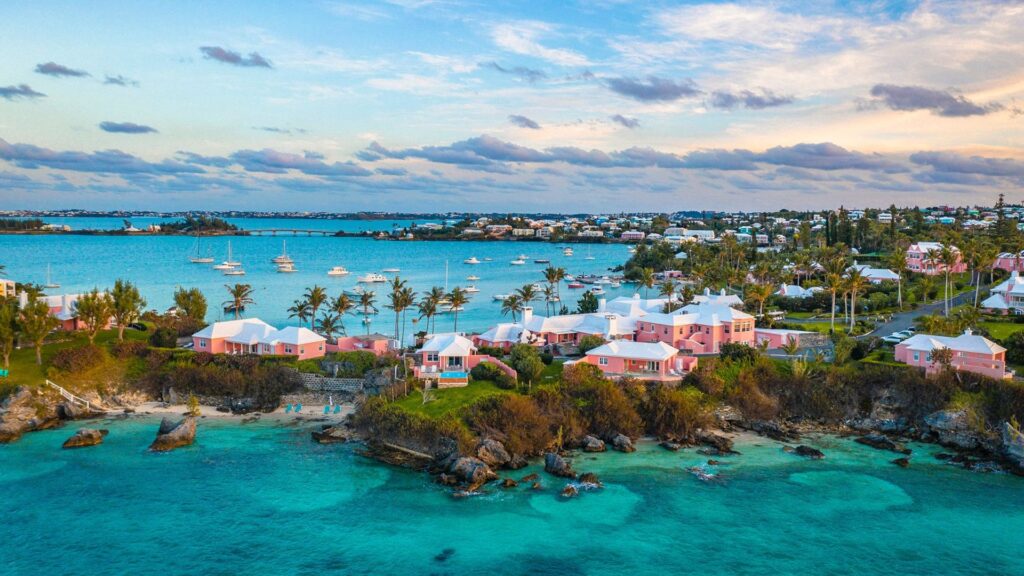
Bermuda has positioned itself as a forward-thinking fintech jurisdiction. In 2018, it introduced new banking license categories specifically designed to support crypto and fintech companies.
The government also streamlined approval processes for ICOs, attracting major industry players. Large exchanges and blockchain companies have since established compliance and operational bases on the island, citing regulatory responsiveness and efficiency.
Switzerland

Switzerland remains a global blockchain hub, particularly in the canton of Zug – often called “Crypto Valley.” Hundreds of blockchain startups operate there, supported by predictable regulation and favorable tax treatment.
The Ethereum Foundation is headquartered in Zug, and Switzerland continues to attract exchanges, custodians, and protocol developers seeking legal certainty and institutional credibility.
Antigua and Barbuda

Antigua and Barbuda has announced that it accepts Bitcoin and other digital assets for payments related to its citizenship-by-investment program, though implementation has been gradual.
As global banking pressure increases on small island economies, crypto payments offer an alternative channel for diversification. While adoption is still evolving, the country has clearly signaled openness to digital assets.
Georgia

Georgia was an early adopter of blockchain technology, particularly in crypto mining. Subsidized electricity has made mining economically viable, especially in eastern regions of the country.
While local banks remain cautious, government institutions have shown openness to blockchain use cases. Georgia also offers low living costs, simple residency options, and a fast path to citizenship for entrepreneurs.
Portugal

Portugal has long been considered one of Europe’s most crypto-friendly countries. Although tax rules tightened in 2023, it remains attractive for many investors.
Long-term crypto holdings (over 365 days) are exempt from capital gains tax, while short-term gains are taxed at a flat rate. Cryptocurrency transactions are also exempt from VAT, and regulatory barriers for crypto businesses are lower than in many EU states.
Countries Where Crypto Is Banned
A small number of countries have imposed outright bans on owning or trading cryptocurrencies. These include:
China, Saudi Arabia, Pakistan, Bangladesh, Nepal, Egypt, Tunisia, Algeria, Morocco, and Bolivia.
In most other countries, crypto ownership and trading are legal, though subject to varying degrees of regulation, reporting requirements, and taxation.
Final Note
Crypto regulation is evolving rapidly. A country that is welcoming today may impose restrictions tomorrow, which is why flexibility and jurisdictional diversification remain essential. For investors and entrepreneurs, understanding where crypto is supported – and how it integrates with banking, residency, and tax systems – can make all the difference.

