
The Henley Private Wealth Migration Report 2026, published on 16 June 2026, projects that 165,000 high-net-worth individuals will relocate internationally this year, a 16% increase over the record 142,000 millionaire moves in 2025. This is not a temporary post-pandemic rebound. It is now a structural, long-term feature of the global economy. As Dr. Juerg Steffen, Henley & Partners CEO, frames it: high-net-worth individuals, centi-millionaires, and billionaires are no longer merely hedging against uncertainty. They are strategically positioning themselves, their families, and their assets to capitalize on growth opportunities in an increasingly fragmented world.
Behind the headline number sits a more interesting picture. The UAE, the leading destination for millionaire migration over the past two years, attracted approximately 9,800 millionaires in 2025 with USD 63 billion in associated wealth. The United States simultaneously generated the world’s highest demand for outbound residency and citizenship options as affluent Americans built international diversification at unprecedented levels. The UK recorded the largest projected outflow in the report’s history. Italy’s USD 300,000 flat-tax regime, raised from €200,000 on 1 January 2026, continues to attract ultra-high-net-worth families. And a new framework, the sovereign portfolio of layered residence and citizenship rights, is replacing the old paradigm of single-jurisdiction relocation.
Here is what the 2026 wealth migration data actually shows: the winners, the losers, the new entrants, the framework shift, and what HNWI families are doing differently this year.
2026 PROJECTION: Henley & Partners projects 165,000 millionaire relocations in 2026, a 16% increase over the record 142,000 moves in 2025. This is the largest migration of wealth on record and reflects a structural, multi-year acceleration rather than a temporary fluctuation. Total wealth in motion is estimated in the hundreds of billions of dollars annually. Source: Henley Private Wealth Migration Report 2026, published 16 June 2026.

The Top Destinations: Where Wealth Is Going in 2026
Ten countries dominate the global inflow picture, and the leaders are remarkably consistent year over year.
Global top destinations by net inflow (2025 data, 2026 projections accelerating)
- United Arab Emirates: +9,800 millionaires, approximately USD 63 billion in wealth inflow (the leading destination for the second consecutive year)
- United States: +7,500 millionaires (still the world’s largest private wealth market)
- Italy: +3,600 millionaires (driven heavily by the Non-Dom flat-tax regime and UK departures)
- Switzerland: +3,000 millionaires (stability and traditional private banking)
- Saudi Arabia: +2,400 millionaires (emerging under Vision 2030)
- Singapore: +1,600 millionaires (Asian regional hub)
- Portugal: +1,400 millionaires (despite Golden Visa restructuring)
- Greece: +1,200 millionaires (Non-Dom flat tax and Golden Visa)
- Canada: +1,000 millionaires (stable, education-focused)
- Australia: +1,000 millionaires (Pacific lifestyle and security)
Why the UAE leads, and what 2026 looks like
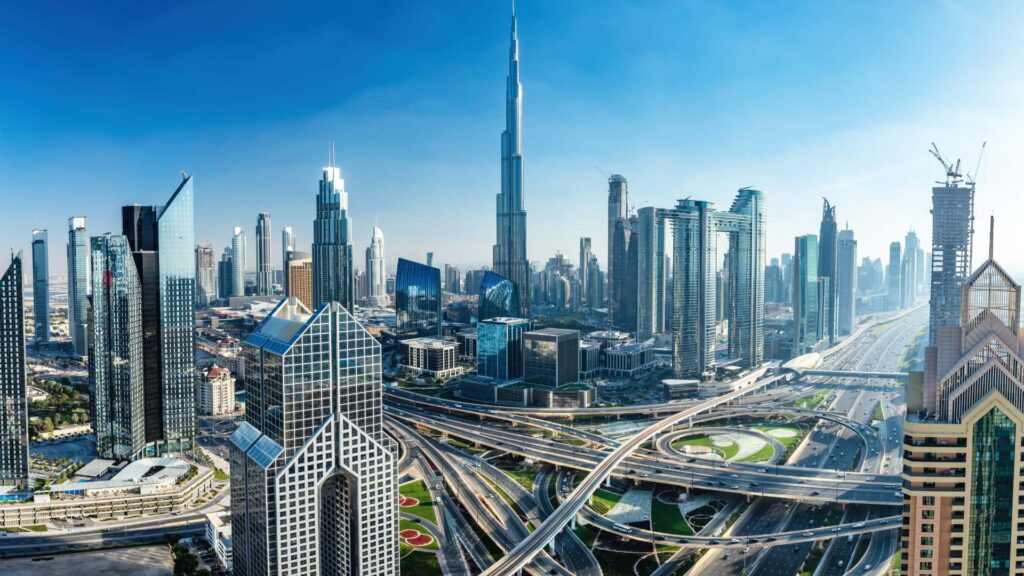
The UAE has consolidated its position as the leading global destination for HNWI migration through a combination of factors: zero personal income tax, no capital gains tax or wealth tax for individuals, the 10-year renewable Golden Visa (now expanded to include nominated HNWI without investment requirement, content creators, e-sports professionals, certified educators, and other categories), high-quality infrastructure, the role as a gateway between Europe, Asia, and Africa, and a streamlined regulatory environment for international capital.
The 2026 picture has nuances. Recent geopolitical developments in the Middle East have prompted what Henley describes as a new phase of contingency planning among internationally mobile UAE residents, not an exodus but a diversification. Dominic Volek, Group Head of Private Clients at Henley & Partners, captured this as: “The UAE story in 2026 is one of diversification and optionality, not an exodus. What we are seeing is greater engagement around resilience and contingency planning rather than relocation.” Affluent UAE residents are increasingly adding second residences or citizenships to their existing UAE base rather than leaving the UAE.
The new entrants: Saudi Arabia and what Vision 2030 has built
Saudi Arabia at +2,400 millionaires is among the most significant new entrants in the wealth migration landscape. Under the Vision 2030 agenda, the Kingdom has deliberately shifted from a predominantly hydrocarbon-based economy toward a diversified, innovation-led hub. The country has introduced the Premium Residency program offering long-term residence via business investment, entrepreneurship, exceptional competence, and real estate acquisition routes, alongside a premium indefinite fixed-term residence option.
The Saudi attraction includes return migration of Saudi-origin wealth, attraction of international capital through Vision 2030 initiatives, and the emergence of Riyadh and certain economic zones as serious regional competitors to Dubai. For 2026 and beyond, Saudi Arabia is positioned as a Gulf alternative or complement to the UAE for HNWI buyers seeking exposure to one of the world’s fastest-transforming economies.
Italy: the flat tax that survives every reprice
Italy at +3,600 millionaires is the third-largest destination globally and the leading European destination by inflow. The principal driver is the Non-Dom flat-tax regime under Article 24-bis of the Italian Tax Code, raised from €200,000 to €300,000 per year on 1 January 2026 for new entrants. Despite this nearly 50% increase in cost, demand has remained resilient and is increasingly concentrated among ultra-high-net-worth families.
Italy’s appeal sits in what Henley describes as the regime’s architecture: a flat charge on foreign income over 15 years, no foreign wealth tax, and firm grandfathering of existing participants at their original rate. Much of the 2026 demand comes from UK departures following Britain’s non-dom regime reform, with Greece and Switzerland as alternative European destinations. The €300,000 cost is uneconomical at lower foreign income levels but increasingly competitive for ultra-high-net-worth families with €5 million+ in annual foreign income.

The Top Source Countries: Where Wealth Is Leaving
The outflow side of the ledger has shifted significantly, with the UK now consistently the largest source country and several traditional outflow countries seeing moderation.
Global top outflows by net departure (2025 data)
- United Kingdom: -16,500 millionaires (the largest outflow ever projected from a single country, driven by tax and political uncertainty post-non-dom reform)
- China: -7,800 millionaires (continuing multi-year trend, though pace has moderated)
- India: -3,500 millionaires (continuing outflow but lower than previous years)
- Russia: -2,400 millionaires (geopolitical and sanctions-driven)
- South Korea: -1,500 millionaires (tax and demographic pressures)
The UK: from net inflow to historic exodus
The UK story is the single most consequential outflow trend of 2026. Following the 2024-2025 non-dom regime reforms (which replaced the long-standing UK non-dom regime with a much shorter four-year tax-free arrival window followed by full worldwide taxation), the UK has experienced what Henley terms an unprecedented outflow. Approximately 4,000 UK company directors left for destinations like the UAE and Italy after the 2025 tax reform alone, a 40% departure increase from prior years.
The preferred destinations for departing UK millionaires are concentrated in four jurisdictions: the UAE (zero income tax, established Golden Visa framework), the USA (despite its tax complexity, for specific business and family reasons), Italy (Non-Dom flat tax for those with substantial foreign income), and Switzerland (private banking, stability, and the lump-sum forfait tax regime for new arrivals). For UK-based HNWI families evaluating their position in 2026, the question is no longer whether to consider international diversification but where to deploy it.
China: significant but moderating
China at -7,800 millionaires remains a top outflow source, but the pace has moderated compared with the peak years of 2022-2024. Domestic economic development is helping slow the trend: technology clusters in cities like Shenzhen and Hangzhou, expansion in sectors including private banking, healthcare, and entertainment, and continued growth of China’s domestic wealth base are contributing to stronger wealth retention. Departing Chinese HNWI families increasingly target Singapore, the UAE, and selected Western destinations, with Caribbean CBI programs (including Grenada with its China visa-waiver) playing a continuing role for those seeking second citizenship.
India: still outflowing but lower than past years
India at -3,500 millionaires in 2025 continues the country’s multi-year outflow trend but at lower levels than previous years. Indian HNWI departures are increasingly concentrated in the UAE (geographic proximity, business links, and tax efficiency), the US (despite immigration complexity, for education and business reasons), and select European destinations. The continued growth of India’s domestic economy and wealth base, alongside maturing private banking and wealth management infrastructure, is moderating the outflow even as it persists.

The United States: Two Stories at Once
The US case in 2026 is the most interesting in the report because two opposite trends coexist. The US is simultaneously one of the largest destinations for inbound HNWI migration (+7,500 in 2025) and one of the largest sources of outbound residency and citizenship enquiries Henley receives globally.
The two-direction US picture
As Dr. Steffen explains: “These are not contradictory trends. They reflect two different groups making two different decisions. Some are drawn to the ample opportunities available within the USA, while others are seeking additional residence or citizenship options as part of a broader international diversification strategy. For many, this is not a decision to leave the USA but to create optionality.”
The outbound US enquiry pattern is what makes 2026 distinctive. Affluent Americans are not necessarily leaving the US. They are increasingly building second residencies and citizenships in jurisdictions including the UAE, Portugal, Italy, Greece, Caribbean nations, Switzerland, and others. The motivation is structural: access as a strategic asset, valued not only for where it leads today but for the flexibility and resilience it may provide tomorrow. This is the sovereign portfolio framework at its purest: a US family that retains its US base but adds layered international rights as insurance and optionality.
The Sovereign Portfolio: The Framework Shift of 2026
The Henley 2026 Report identifies a deeper conceptual shift that defines the year: HNWI families are no longer treating residence and citizenship as fixed attributes. They are treating them as a strategic asset class to be portfolio-managed across jurisdictions, similar to how they treat their financial holdings.
What the sovereign portfolio looks like in practice
As Andrew Raming, Associate Director Private Clients at Henley, articulated at a wealth management forum in Thailand earlier this year: wealthy clients are effectively treating jurisdictional exposure “the same way they treat asset allocation.” Diversification now extends beyond portfolios to include geography, regulation, and political risk.
A typical sovereign portfolio for an ultra-high-net-worth family in 2026 might combine: an operational tax-residency base in the UAE (zero tax, business hub), a second citizenship from a Caribbean program (St. Kitts for mobility or Grenada for US/China business access), an EU residency or citizenship pathway (Portugal, France Talent Passport, or Italy Non-Dom), and a backup option through a low-cost CBI program (Sao Tome or Vanuatu) or a holding-pattern residence permit elsewhere.
Total capital deployment for a layered structure of this kind ranges from approximately USD 1 million to USD 3 million across all programs, plus ongoing maintenance. For families above approximately USD 5 million in liquid assets, the resilience case for two to four layered statuses increasingly beats any single-program decision. Each instrument hedges the others’ specific risks: Caribbean Schengen-suspension risk hedged by EU residency, EU regulatory risk hedged by UAE base, geopolitical exposure to any single region hedged by geographic diversification.
Why the framework matters now
Three factors have driven this conceptual shift in 2026. First, regulatory volatility has accelerated: the Malta CBI program closed under the EU Court of Justice ruling in April 2025, Spain ended its Golden Visa real estate route in 2025, Portugal removed real estate from Golden Visa qualification in 2023, the UK’s non-dom regime was fundamentally restructured, and the EU has signaled harder lines on visa-free access for CBI countries. Single-program reliance has become measurably riskier.
Second, geopolitical fragmentation has accelerated. Conflict in the Middle East, tensions in East Asia, and broader geopolitical pressures have made geographic concentration of family wealth, businesses, and residency rights look more like a risk than a feature. Diversification is the response.
Third, the cost-benefit math has shifted. As the cost of single high-value programs has risen (Italy’s flat tax from €100,000 to €300,000, Portugal’s restructured Golden Visa, Greece’s three-zone restructuring up to €800,000 in premium areas), the relative cost of a layered portfolio of multiple lower-threshold programs has become more competitive on a per-jurisdiction basis. A combination of programs can deliver greater optionality than any single high-cost program at comparable total deployment.
The 2026 Trend Lines: What HNWI Families Are Actually Doing
Beyond the country-level data, several behavioral patterns define the 2026 wealth migration landscape.
Trend 1: Acquiring optionality without relocating
Increasing numbers of HNWI families are obtaining additional residence and citizenship rights without changing their primary residence. The UAE Golden Visa, with no minimum stay, allows residency without relocation. Caribbean citizenship requires no relocation at any stage. Portugal’s Golden Visa requires only 7 days per year. The growing emphasis on optionality without relocation reflects a strategic shift: building flexibility for the future rather than executing a present-day move.
Trend 2: Family-driven migration decisions
Younger generations are driving migration decisions to an unprecedented degree. According to Henley’s research, nearly half of billionaires under 55 changed their country of residence in the past year. Family wealth migration is increasingly led by next-generation considerations: where children will be educated, where the family will be physically located in five to ten years, and where the inheritable rights (passports, residence permits, business platforms) will sit. The decision-making timeline is generational, not annual.
Trend 3: Tax migration moderating in importance, geopolitical migration intensifying
Traditional tax-driven migration (relocating to lower-tax jurisdictions) remains a significant driver but is being increasingly joined by geopolitical migration. Concerns over personal safety in regions facing conflict or rising tensions, currency stability in jurisdictions like Turkey or Argentina, and broader political risk assessments are accelerating decisions that would previously have been deferred.
Henley’s data suggests global geopolitical tensions increased millionaire migration diversification strategies by approximately 47% in 2025. Wealthy families are increasingly relocating proactively rather than reactively, with approximately 60% of HNWI families now reporting they consider future-proofing their wealth as a primary factor in location decisions.
Trend 4: Real estate as a wealth migration anchor
HNWI migration continues to drive substantial real estate flows in destination jurisdictions. Each millionaire relocation creates downstream effects: luxury real estate transactions in destination cities, expanded high-end service sectors, increased investment commitments, and luxury tourism revenue. The destinations attracting the largest wealth inflows (UAE, Italy, Switzerland, Singapore, Portugal, Greece) are all seeing measurable increases in luxury real estate activity correlated with HNWI arrivals.
The Programs and Pathways Driving 2026 Migration
Nine of the top ten HNWI destinations operate formal residence or citizenship programs designed expressly to attract international investors. This is no longer a peripheral mechanism. It is the defining channel through which global wealth is reallocating.
The leading programs by 2026 activity
- UAE Golden Visa: 10-year renewable residency, AED 2 million property route (~USD 545,000) or nomination-based no-investment route for HNWI
- US EB-5: USD 800,000 minimum investment in TEA areas, processing complexity but established pathway
- Italy Investor Visa and Non-Dom regime: €250,000 to €2 million investment routes plus €300,000 annual flat tax
- Swiss lump-sum forfait taxation: cantonal arrangements for new high-income residents
- Saudi Premium Residency: business investment, entrepreneurship, and exceptional competence routes
- Singapore Global Investor Programme: SGD 10 million minimum
- Portugal Golden Visa: €500,000 fund route (real estate route closed in 2023)
- Greece Golden Visa: €250,000 (heritage route) to €800,000 (Zone A premium areas)
- Caribbean CBI programs: USD 200,000 to USD 250,000+ across five Eastern Caribbean nations
- Lower-cost newer programs: Sao Tome and Principe (USD 90,000), Vanuatu (USD 130,000), Nauru (USD 105,000)
The breadth of available programs is itself a sign of how mature the investment migration industry has become. As Henley puts it: residence and citizenship rights are increasingly assembled rather than inherited: a curated portfolio of jurisdictions used to engineer resilience and mobility across generations.
Frequently Asked Questions
Where will the most millionaires move in 2026?
Based on 2025 data and 2026 projections, the leading destinations remain consistent: UAE (~9,800 in 2025, likely higher in 2026), USA (~7,500), Italy (~3,600), Switzerland (~3,000), and Saudi Arabia (~2,400). The full top ten includes Singapore, Portugal, Greece, Canada, and Australia. The UAE has held the top position for two consecutive years and is projected to maintain that position in 2026, though with diversification activity among existing residents.
Which countries are losing the most millionaires?
The UK leads global outflows at approximately -16,500 millionaires in 2025, the largest outflow ever projected from a single country. Followed by China (-7,800, moderating), India (-3,500, declining), Russia (-2,400, geopolitical), and South Korea (-1,500). The UK figure is particularly striking because it reflects the structural impact of the 2024-2025 non-dom regime reforms, which removed a tax advantage that had attracted internationally mobile wealth to Britain for decades.
Is the US really both attracting and losing millionaires?
Yes, both. The US attracted approximately +7,500 millionaires in 2025 inbound, while simultaneously generating the world’s largest outbound demand for residence and citizenship enquiries from Henley & Partners. These are different groups: inbound HNWI seek the US for business opportunities and the world’s largest private wealth market; outbound enquiries from Americans typically reflect diversification (adding second residencies or citizenships) rather than full relocation. The pattern is two different decisions by two different groups, not contradictory trends.
Why are so many UK millionaires leaving?
The principal driver is the 2024-2025 reform of the UK’s non-dom regime, which replaced the previous long-standing structure with a much shorter four-year tax-free arrival window followed by full worldwide taxation. For internationally mobile HNWI who had structured their UK residency around the non-dom regime, the reform fundamentally changed the calculus. Departures have concentrated in four main destinations: UAE, USA, Italy, and Switzerland, with Italy’s €300,000 flat tax regime catching the largest share of UK departures with significant foreign income.
What is the sovereign portfolio framework?
The sovereign portfolio is the framework, articulated in the Henley 2026 Report and increasingly applied by HNWI families, of treating residence and citizenship rights as a strategic asset class to be diversified across multiple jurisdictions, similar to financial portfolio diversification. A typical sovereign portfolio might combine an operational tax-residency base (often UAE), a Caribbean citizenship for mobility, an EU residency pathway for citizenship, and a backup option through a low-cost CBI or alternative residence. The framework reflects the structural shift away from single-jurisdiction reliance toward layered international optionality.
How much capital does a sovereign portfolio require?
A meaningful layered structure typically requires USD 1 million to USD 3 million in total capital deployment across multiple programs, plus ongoing maintenance costs. This is meaningful but not prohibitive for families above approximately USD 5 million in liquid assets. For ultra-high-net-worth families, layered structures of USD 3 million to USD 10 million across four to six programs are increasingly common. The resilience case for layered statuses increasingly beats any single-program decision once total deployment crosses approximately USD 1 million.
Is this trend likely to continue?
Yes, structurally. The three underlying drivers (regulatory volatility, geopolitical fragmentation, and the shifted cost-benefit math of layered structures versus single high-cost programs) are not cyclical. Henley’s projection of 165,000 moves in 2026 represents continued acceleration from 142,000 in 2025, and the report explicitly identifies wealth migration as having transitioned from a post-pandemic rebound to a defining feature of the international economy. Barring a major reversal in any of the underlying drivers, the trend trajectory points toward continued growth in HNWI migration through the late 2020s.
What This Means for HNWI Families Considering Their Position
The 2026 data tells a clear story. The pace of HNWI migration is accelerating, the jurisdictions winning and losing are increasingly defined by their policy frameworks rather than chance, and the strategic approach is shifting from single-program relocation to layered sovereign portfolios. For families evaluating their position in this landscape, three implications follow.
Implication 1: Single-jurisdiction reliance is increasingly risky
Whatever your current primary jurisdiction (UK, US, India, China, UAE, or elsewhere), exclusive reliance on it for residence, business, family wealth, and inheritance is more exposed to regulatory, tax, and geopolitical risk in 2026 than at any point in the past decade. The pattern repeats: rules change, jurisdictions reprice, programs close. A layered structure of two to four jurisdictional rights provides materially more resilience than any single program, regardless of how favorable that single program looks today.
Implication 2: Acting on current rules locks in current terms
The pattern of program restructuring (Portugal real estate closure 2023, Spain Golden Visa closure 2025, Italy flat tax repricing 2026, Greece three-zone restructuring 2024, UK non-dom reform 2024-2025) means that the current rules of any specific program are not necessarily the rules that will apply next year. Buyers who act under current rules typically lock in current terms through grandfathering provisions. Buyers who wait often face higher costs, tighter eligibility, or both.
Implication 3: The advisor matters more than the program
Choosing the right combination of programs for a specific family situation, navigating the cross-border tax interactions, structuring the application sequencing, and managing the ongoing compliance across multiple jurisdictions is meaningfully more complex than choosing any single program. The advisory choice (who guides the family’s sovereign portfolio construction) increasingly matters more than the choice of any specific country or program. Advisory firms aligned with the family’s outcome (rather than with commissions on specific programs) are structurally better positioned to recommend the right portfolio, including the option of not pursuing a specific program if the fit is not there.
The Honest Conclusion
HNWI migration in 2026 is not a temporary fluctuation. It is the defining structural shift of the global wealth landscape in this decade. With 165,000 millionaire relocations projected for 2026 (a 16% increase over the record 142,000 in 2025), the question facing HNWI families is no longer whether international diversification matters but how to construct it.
The data shows where wealth is going: the UAE, the US, Italy, Switzerland, Saudi Arabia, and a handful of other carefully positioned destinations. It shows where wealth is leaving: the UK above all, joined by China, India, Russia, and South Korea. And it shows how the most strategic HNWI families are approaching the question: not as a single relocation decision, but as a sovereign portfolio of layered residence and citizenship rights designed to deliver resilience, optionality, and intergenerational protection.
For families considering their position in 2026, the cost of action is increasingly less than the cost of inaction. Programs reprice, rules tighten, and the regulatory environment continues to evolve. The families that act on current rules, with proper advisory, in a layered structure that fits their specific situation, are positioning themselves for the next twenty years rather than reacting to the current year.

Your next step
Soland’s Pre-Qualification engagement evaluates your specific situation against the full universe of residence and citizenship options, designs a sovereign portfolio appropriate to your goals and capital, and coordinates the full structure across jurisdictions in coordination with qualified tax counsel where needed. We never recommend a single program when a layered structure better serves your situation, and we never recommend a layered structure when a single program is sufficient.
If your situation calls for action, we tell you what action and in what sequence. If it calls for waiting, we tell you that too. Soland does not sell programs. We help families build the right cross-border structure for the next twenty years. Get in touch through solandworld.com or contact our advisory team directly.

