
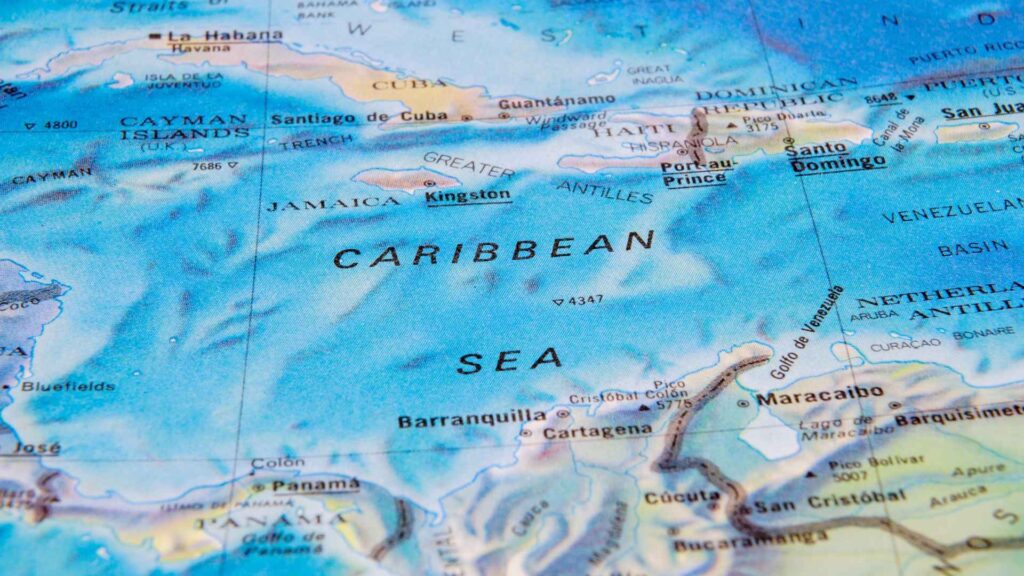
The five Eastern Caribbean citizenship by investment programs (Dominica, Antigua and Barbuda, Grenada, St. Lucia, and St. Kitts and Nevis) have been the backbone of the global CBI market for decades. St. Kitts, established in 1984, is the oldest continuous CBI program in the world. Dominica followed in 1993. Antigua and St. Lucia both launched in 2013, and Grenada in 2013 as well. In 2026, under the harmonizing framework of ECCIRA (the Eastern Caribbean Citizenship by Investment Regulatory Authority, operational since Q2 2026), the five programs share a USD 200,000 minimum floor, standardized due diligence, and a new 30-day physical residency requirement across the first five years for applications filed from July 2026.
But within these harmonized fundamentals, the programs remain genuinely different. Each one has specific structural features that make it uniquely valuable for certain buyer profiles. Dominica leads on cost for single applicants and small families. Antigua is unbeatable for large families through the UWI Fund route. Grenada is the only Caribbean CBI with US E-2 Investor Treaty access and China visa-waiver. St. Lucia offers the widest range of investment routes. St. Kitts holds the premium position with the strongest passport and fastest processing option. Choosing between them means understanding what actually differs, not just what the marketing brochures highlight.
Here is the honest 2026 comparison of all five Caribbean CBI programs: side-by-side cost, structural features, passport strength, processing times, family inclusion, and the specific use cases where each is genuinely the best choice.
2026 ECCIRA UPDATE: Under ECCIRA (operational Q2 2026, headquartered in Grenada), the five Caribbean CBI programs share: USD 200,000 minimum investment floor, harmonized due diligence protocols, mandatory interview for applicants aged 16 and older, biometric capture requirements, and 30-day physical residency across the first 5 years for files lodged from July 2026 onward. Applications filed before July 2026 lock in the pre-ECCIRA framework. Source: ECCIRA framework, Q2 2026.

The Five Programs at a Glance
Before the detailed comparison, the fundamentals of each program.
Dominica: The cost leader
- Minimum investment (single): USD 200,000 EDF donation or USD 200,000 real estate
- Family of 4: USD 250,000 EDF donation
- Processing time: 6 to 9 months
- Passport visa-free/visa-on-arrival: approximately 140-160 destinations including Schengen, UK, Singapore, Hong Kong, China (10-year multi-entry facility), Russia
- Program active since: 1993 (33 years continuous operation)
- Distinctive feature: Cheapest Caribbean CBI at USD 200,000 for single applicants; virtual interview under ECCIRA
Antigua and Barbuda: The family champion
- Minimum investment (family of 4): USD 230,000 NDF donation
- UWI Fund route: USD 260,000 for family of 6+ (includes 1 year tuition-free at University of the West Indies)
- Real estate: USD 300,000 minimum
- Business investment: USD 400,000 minimum
- Processing time: 6 to 9 months
- Passport visa-free: approximately 150 destinations
- Program active since: 2013
- Distinctive features: 5-day physical residency in first 5 years (existed before ECCIRA), widest dependent inclusion, UWI Fund with education benefits
Grenada: The US-China business gateway
- Minimum investment (family of 4): USD 235,000 NTF donation
- Real estate: USD 270,000 minimum (5-year hold)
- Processing time: 6 to 8 months
- Passport visa-free: approximately 145 destinations
- Program active since: 2013
- Distinctive features: Only Caribbean CBI with US E-2 Investor Treaty (after 3 years Grenadian residency), only Caribbean CBI with China 30-day visa-waiver, ECCIRA headquarters located in Grenada
St. Lucia: The route diversity option
- Minimum investment (single): USD 240,000 National Economic Fund (NEF)
- Real estate: USD 300,000
- Government bonds: USD 300,000 (non-interest-bearing, 5-year hold)
- Enterprise investment: USD 3.5M+ (creating 3 jobs)
- Processing time: up to 18 months (the longest among Caribbean CBI)
- Passport visa-free: approximately 139 destinations
- Program active since: 2013
- Distinctive features: Widest range of investment routes (4 options), bond route for capital preservation, streamlined application process
St. Kitts and Nevis: The premium position
- Minimum investment (single or family of 4): USD 250,000 Sustainable Island State Contribution (SISC)
- Real estate: USD 400,000 minimum condominium unit or USD 800,000 minimum home
- Public Benefit Option: USD 250,000 for approved public benefit projects
- Standard processing: 4 to 6 months
- Accelerated processing (60-day route): available for premium fee
- Passport visa-free: approximately 155-160 destinations (strongest Caribbean passport)
- Program active since: 1984 (42 years continuous operation, oldest CBI in the world)
- Distinctive features: Oldest and most institutionally recognized program, 60-day accelerated processing available, premium passport mobility

Cost Comparison: Which Is Cheapest for Your Family Size
The cost leader flips depending on family size, and understanding this properly is essential to program selection.
Single applicant (all-in cost estimates)
- Dominica EDF: approximately USD 227,500 (USD 200,000 donation + USD 7,500 due diligence + USD 3,000 government fees + USD 17,000 agent/legal)
- Antigua NDF: approximately USD 260,000 (USD 230,000 NDF + fees)
- Grenada NTF: approximately USD 275,000 (USD 235,000 NTF + fees)
- St. Lucia NEF: approximately USD 275,000 (USD 240,000 NEF + fees)
- St. Kitts SISC: approximately USD 300,000 (USD 250,000 SISC + due diligence + fees)
For a single applicant, Dominica is the cheapest by a meaningful margin. St. Kitts is the most expensive but delivers the strongest passport.
Family of 4 (all-in cost estimates)
- Antigua NDF: approximately USD 260,000 (USD 230,000 NDF + fees; family of 4 is included in the base donation)
- Grenada NTF: approximately USD 275,000 (USD 235,000 NTF + fees; family of 4 included)
- St. Lucia NEF: approximately USD 285,000 (USD 240,000 for main + spouse + reduced fees for children)
- Dominica EDF: approximately USD 300,000 to USD 320,000 (USD 250,000 donation for family + fees)
- St. Kitts SISC: approximately USD 300,000 (USD 250,000 SISC + fees; family of 4 included)
For a family of four, Antigua’s NDF at USD 230,000 becomes the cost leader, and the cheaper-for-single Dominica actually becomes among the more expensive options. This flip is a critical planning point.
Family of 6+ (all-in cost estimates)
- Antigua UWI Fund: approximately USD 290,000 for family of 6+ (USD 260,000 UWI donation + fees, includes 1 year tuition-free at University of the West Indies for one dependent)
- Grenada NTF: USD 235,000 + USD 25,000 per additional dependent beyond 4 (family of 6: approximately USD 325,000)
- Dominica EDF: USD 250,000 + USD 25,000-USD 50,000 per additional dependent (family of 6: approximately USD 360,000)
For families of 6 or more, Antigua’s UWI Fund is structurally the cheapest option, and the University of the West Indies tuition benefit provides additional value for families with university-age children.
Passport Strength Comparison
Caribbean passport mobility profiles are broadly similar but with meaningful differences in specific destinations.
Ranking by visa-free destination count
- St. Kitts and Nevis: approximately 155-160 destinations (strongest)
- Antigua and Barbuda: approximately 150 destinations
- Grenada: approximately 145 destinations
- Dominica: approximately 140-160 destinations (varies by source and visa-on-arrival counting)
- St. Lucia: approximately 139 destinations
The specific access that matters
Rather than counting total destinations, the specific access relevant to the buyer’s use case matters most:
- Schengen Area (currently visa-free for all five, subject to EU 2026-2027 review)
- United Kingdom (currently visa-free for all five)
- China: Grenada offers 30-day visa-waiver (unique among the five); others require standard Chinese visas
- Russia: all five allow visa-free 90-day access
- Singapore, Hong Kong: all five with variations in stay length
- US: none of the five offer US visa-free access; Grenada uniquely offers E-2 Investor Treaty access after 3 years of Grenadian residency
The Schengen risk
The single most important 2026 consideration for all five Caribbean CBI programs is the EU Schengen regulatory review. The EU has been considering suspension of visa-free access for CBI passports across the Caribbean, following the precedent set by Vanuatu’s December 2024 suspension. Any EU action would affect all five programs simultaneously (as they operate as a harmonized system under ECCIRA).
Practical implication: if visa-free European travel is your primary use case for Caribbean CBI, understand that this access is under active EU review. Alternative programs (EU Golden Visas that provide direct EU residence rights) or non-EU-focused use cases (US E-2 through Grenada, general mobility for non-European destinations) are less exposed to this specific risk.

Processing Time Comparison
Speed differs meaningfully across the five programs.
Standard processing times
- St. Kitts standard: 4 to 6 months (fastest standard processing)
- St. Kitts accelerated: 60 days (fastest globally, available for premium fee)
- Antigua: 6 to 9 months
- Grenada: 6 to 8 months
- Dominica: 6 to 9 months (virtual interview under ECCIRA streamlines the process)
- St. Lucia: up to 18 months (the longest standard timeline)
When speed matters
For buyers with urgent needs (specific travel plans, business timing, or emerging risks that motivate acquisition), St. Kitts’ 60-day accelerated route is the only Caribbean option that delivers in under three months. The premium for accelerated processing is meaningful (typically USD 25,000+ additional), but for time-sensitive situations, it is the difference between having citizenship in two months versus nine months. For non-urgent applications, the 6-9 month standard processing across Dominica, Antigua, and Grenada is broadly equivalent.
Best-Fit Use Cases: Which Program for Which Buyer
Each program has a specific buyer profile it fits best.
Choose Dominica if:
- You are a single applicant or small family (up to 4 members) prioritizing lowest cost
- You value 33 years of institutional program history
- You want the virtual interview under ECCIRA (no travel required for the interview itself)
- You are comfortable with EDF donation as a non-refundable contribution
Choose Antigua and Barbuda if:
- You have a family of 4 (base NDF at USD 230,000 is the cheapest for family of 4)
- You have a family of 6+ (UWI Fund at USD 260,000 with tuition benefit is uniquely economical for large families)
- You value the specific 5-day physical residency requirement that has always existed for Antigua (now aligns with the ECCIRA 30-day framework)
- You have children who would benefit from University of the West Indies tuition-free education (UWI route only)
- You want broad dependent inclusion (Antigua has widened definitions)
Choose Grenada if:
- Your business involves the US (US E-2 Investor Treaty access after 3 years Grenadian residency)
- Your business involves China (30-day China visa-waiver, unique among Caribbean CBI)
- You value being at the ECCIRA regulatory headquarters (potential procedural advantages for future changes)
- You want the real estate route with a shorter 5-year hold than some competitors
Choose St. Lucia if:
- You want investment route diversity (4 options including NEF donation, real estate, government bonds, and enterprise investment)
- You prefer the bond route for capital preservation
- You value the streamlined electronic application process
- You have an active large-scale business investment (USD 3.5M+ enterprise route)
Choose St. Kitts and Nevis if:
- You value the strongest Caribbean passport (approximately 155-160 destinations)
- You have urgent timing needs (60-day accelerated processing available)
- You value 42 years of institutional program history (the oldest CBI globally)
- You want a family of 4 included in the base SISC at USD 250,000
- You have USD 400,000+ for real estate and prefer that route over donations
Common Considerations Across All Five
Several considerations apply to any Caribbean CBI choice in 2026, regardless of which program is selected.
ECCIRA harmonization
All five programs operate under ECCIRA’s harmonized standards from Q2 2026: USD 200,000 minimum floor, standardized due diligence, mandatory interview at age 16+, biometric capture, and the 30-day physical residency requirement across the first 5 years for files lodged from July 2026. Applications filed before July 2026 lock in the pre-ECCIRA framework and avoid the residency requirement, though the other harmonization elements (interview, biometrics) still apply.
The illegal financing enforcement
Since 2024, Caribbean governments have intensified enforcement against unauthorized financing arrangements (third-party loans, agent-provided payment plans, discounted government fees). Applications discovered to involve prohibited financing schemes have been rejected, and at least one citizenship has been revoked. Any offer of financing on Caribbean CBI programs that is not explicitly government-approved should be treated as a structural risk to the application.
The EU Schengen regulatory review
The most important 2026-2027 consideration for all Caribbean CBI programs. The EU is under pressure to suspend visa-free Schengen access for CBI passports. No specific timeline has been announced but the possibility is real. Buyers whose primary use case is European travel should factor this uncertainty into their decision. Buyers whose primary use case is elsewhere (US E-2 via Grenada, general Asia-Pacific mobility, tax planning, Plan B optionality independent of European access) are less exposed to this specific risk.
Frequently Asked Questions
Which Caribbean CBI is really the cheapest?
Depends on family size. Dominica at USD 200,000 is cheapest for single applicants. Antigua at USD 230,000 NDF is cheapest for family of 4. Antigua’s UWI Fund at USD 260,000 is cheapest for family of 6+ (with tuition benefit). The Dominica-to-Antigua flip at family of 4 catches many buyers who assume Dominica is universally cheapest.
Which passport is the strongest?
St. Kitts and Nevis, with approximately 155-160 visa-free destinations, is generally considered the strongest Caribbean passport. Antigua at 150, Grenada at 145, Dominica at 140-160, and St. Lucia at 139 follow. The differences are meaningful but not dramatic; specific destinations relevant to your travel pattern matter more than total counts.
Which is fastest?
St. Kitts’ 60-day accelerated route is the fastest globally, available for a premium fee. St. Kitts’ standard processing at 4-6 months is also faster than the 6-9 month standard for Dominica, Antigua, and Grenada. St. Lucia at up to 18 months is the slowest.
Do any of them include US access?
None of the five offer US visa-free access. Grenada uniquely offers US E-2 Investor Treaty access after 3 years of Grenadian residency (allowing US business operations under the treaty). For US access specifically, Grenada is the only Caribbean CBI that provides a structural pathway; the other four do not.
What is the ECCIRA framework and how does it affect me?
The Eastern Caribbean Citizenship by Investment Regulatory Authority became operational in Q2 2026 and harmonizes standards across the five Caribbean CBI programs. If you apply after July 2026, you must complete 30 days of physical residency in your chosen jurisdiction across the first 5 years of citizenship. You must attend a virtual or in-person interview if you are 16 or older, and submit biometric data. The USD 200,000 minimum floor applies to all five. Applications filed before July 2026 lock in the pre-ECCIRA no-residency framework.
Should I be worried about the EU Schengen risk?
If European travel is your primary use case, yes. The EU is actively reviewing Caribbean CBI visa-free Schengen access, and any action would affect all five programs. If European access is not your primary use case (you have another passport that provides it, you focus on non-European mobility, you want CBI for tax planning or Plan B), the Schengen risk is less central. Buyers whose primary Plan B need is European access should probably not rely solely on Caribbean CBI for that access.
Can I hold multiple Caribbean citizenships?
Yes, all five Caribbean CBI programs permit dual and multiple citizenship. Some UHNW families acquire two Caribbean CBIs (typically pairing St. Kitts for premium mobility with Grenada for US E-2 access) as part of a comprehensive sovereign portfolio. Each program’s due diligence is independent of the others, though your existing citizenships are disclosed as part of the application.

The Honest Conclusion
The five Caribbean CBI programs in 2026 share a harmonized framework under ECCIRA but retain meaningful structural differences. Choosing the right program requires understanding the specific advantages: Dominica for single-applicant cost leadership, Antigua for family-of-4 and large-family cost efficiency plus UWI education benefits, Grenada for US-China business access, St. Lucia for investment route diversity, and St. Kitts for the premium passport and fastest processing.
The single most important 2026 consideration across all five is the EU Schengen regulatory review through 2026-2027, which introduces uncertainty on the European access dimension that has been central to Caribbean CBI marketing. Buyers whose Plan B priorities align with Caribbean CBI’s actual current strengths (mobility to Asia-Pacific and Latin America, US access via Grenada’s E-2, generational optionality, tax neutrality) are less exposed to this specific risk than buyers focused specifically on European travel.
Your next step
Soland’s Pre-Qualification engagement evaluates which Caribbean CBI program (if any) fits your specific situation across cost, family structure, use case, and long-term optionality. We compare the five programs honestly against each other and against non-Caribbean alternatives (Sao Tome for lower cost, EU Golden Visas for direct European access, UAE for zero-tax operational base). We tell you clearly which program fits your situation, or if no Caribbean CBI is the right instrument for your goals.
If a Caribbean CBI is the right fit, we coordinate the application through licensed authorized agents under current rules. If a different program serves you better, we tell you that first. Soland does not sell passports. We help families build the right cross-border structure for the next twenty years. Get in touch through solandworld.com or contact our advisory team directly.

