
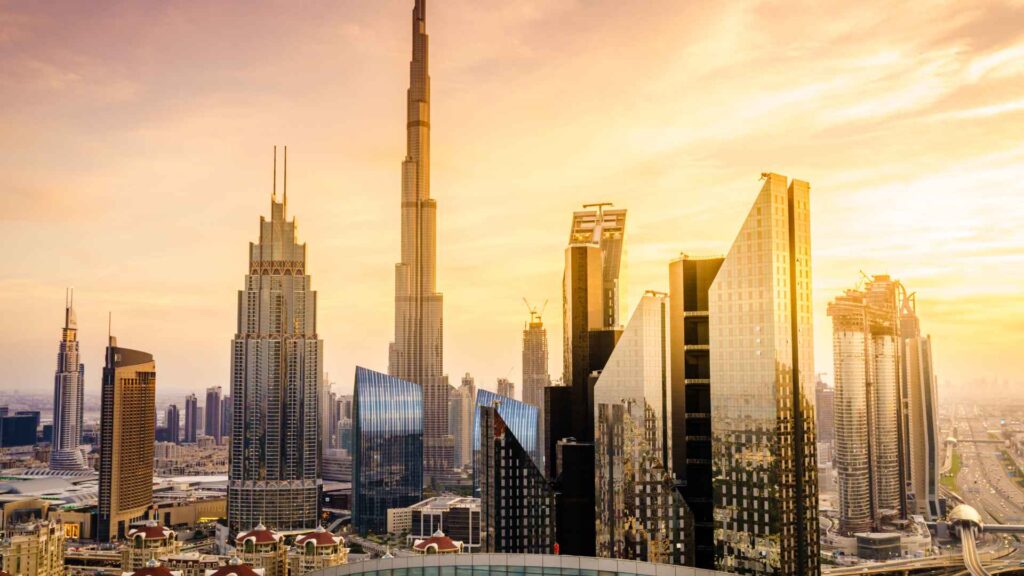
The UAE has more than 45 free zones. For HNWI structuring in 2026, four of them dominate the practical shortlist: DIFC (Dubai International Financial Centre), DMCC (Dubai Multi Commodities Centre), ADGM (Abu Dhabi Global Market), and IFZA (International Free Zone Authority). These four represent the meaningful choices for financial services, commodities and crypto operations, asset management and family offices, and cost-efficient general business respectively. The rest of the free zone landscape mostly delivers variations on these core themes at different price points, sector focuses, or geographic locations.
The choice among these four matters more in 2026 than in previous years because of the UAE Corporate Tax regime. Since June 2023, UAE has imposed 9 percent corporate tax above AED 375,000 in taxable income. Free zone companies remain eligible for the 0 percent Qualifying Free Zone Person (QFZP) rate on qualifying income, but only if they meet all conditions under Federal Decree-Law 47 of 2022 and Cabinet Decision 100 of 2023: establishment in an approved free zone, adequate substance, qualifying income only, transfer pricing compliance, non-qualifying revenue under the de minimis cap, audited financials, and no election to opt in to 9 percent. Failing any single condition strips QFZP status for at least 5 tax years.
Here is the honest 2026 comparison of the four principal UAE free zones for HNWI business structuring: their real costs, activity focus, QFZP compatibility, banking access, substance requirements, and the specific use cases where each is genuinely the right choice.
2026 UAE CORPORATE TAX UPDATE: UAE Corporate Tax at 9 percent applies from June 2023 to taxable income above AED 375,000. Free zone companies qualifying as QFZP under Federal Decree-Law 47 of 2022 and Cabinet Decision 100 of 2023 pay 0 percent on qualifying income (broadly: sales to other free zone entities, exports outside the UAE, certain HQ/treasury/manufacturing activities per the FTA qualifying activities list). Selling to UAE mainland customers generates non-qualifying income which reduces or eliminates QFZP status. Small Business Relief for qualifying companies below AED 3M revenue expires 31 December 2026. DMTT at 15 percent applies to multinational groups with global revenue above EUR 750 million from 1 January 2025. Source: UAE Ministry of Finance, Federal Tax Authority, and Federal Decree-Law 47 of 2022.
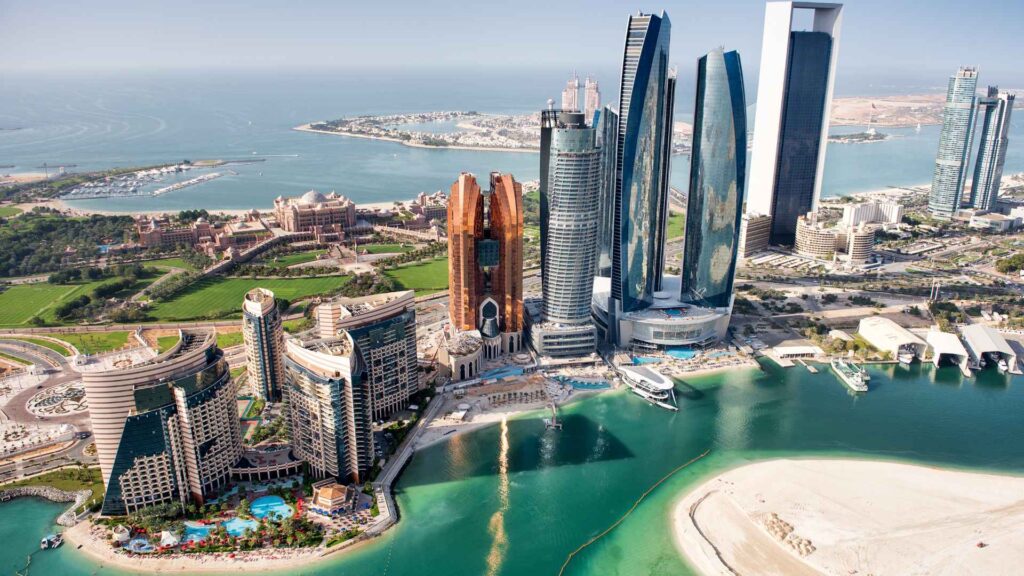
The Four Free Zones at a Glance
Fundamentals of each free zone in 2026.
DIFC: The regulated financial services zone
- Setup cost: roughly USD 30,000 to USD 80,000+ for entity establishment
- Annual renewal: roughly USD 15,000 to USD 40,000
- Legal framework: English common law with own courts (DIFC Courts) and independent regulator (Dubai Financial Services Authority, DFSA)
- Best for: banks, asset managers, family offices at scale, funds, fintech (regulated), legal and professional services firms, private banking, insurance
- QFZP compatibility: yes, but activities must fall within the FTA qualifying income list and the entity must satisfy substance requirements
- Audit requirement: mandatory annual audited financials (IFRS)
- Visa quotas: 1-6 depending on package and office footprint
- Distinctive features: English common law jurisdiction (not UAE civil law), highest regulatory recognition among Middle East financial centers, deep talent pool
DMCC: The world’s largest free zone
- Setup cost: roughly USD 5,000 to USD 13,600 for entity establishment
- Annual renewal: roughly USD 5,000 to USD 8,200
- Recognition: 9 times Global Free Zone of the Year
- Best for: commodities, crypto and digital assets, precious metals, general trading, holding structures, treasury operations, professional services
- QFZP compatibility: yes; DMCC is a widely used QFZP-eligible jurisdiction for qualifying activities
- Audit requirement: mandatory annual audited financials
- Visa quotas: 1-6 depending on office footprint
- Distinctive features: largest and most awarded free zone globally, deepest ecosystem for commodities and crypto, most sophisticated banking access for free zone entities, dominant location in Jumeirah Lakes Towers
ADGM: Abu Dhabi’s regulated financial centre
- Setup cost: roughly USD 15,000 to USD 50,000+ for entity establishment
- Annual renewal: roughly USD 10,000 to USD 30,000
- Legal framework: English common law with own courts (ADGM Courts) and independent regulator (Financial Services Regulatory Authority, FSRA)
- Best for: asset management, family offices, fintech (regulated), holding structures, funds, treasury, foundations
- QFZP compatibility: yes, subject to activity and substance rules
- Audit requirement: mandatory annual audited financials
- Visa quotas: 1-6 depending on package and office
- Distinctive features: strong for family offices (specific Family Office regime), dedicated foundation regime for wealth structuring, common law jurisdiction, competitive alternative to DIFC for asset management at meaningfully lower setup cost
IFZA: The cost-efficient general zone
- Setup cost: from roughly USD 3,500 (starter packages) to USD 8,000+ for standard packages
- Annual renewal: from roughly USD 3,000
- Legal framework: UAE civil law with IFZA specific regulations (International Free Zone Authority)
- Best for: consulting, general trading, e-commerce, IT and SaaS, professional services, holding vehicles for personal wealth
- QFZP compatibility: yes, subject to activity and substance rules
- Audit requirement: audited financials mandatory (increasingly enforced post-Corporate Tax)
- Visa quotas: from 1 to multiple based on package (flexible upgrade)
- Distinctive features: fast 24-hour setup, lowest cost among the four principal HNWI-focused zones, digital-first application process, most popular among founders and SMEs

QFZP: The 0 Percent Corporate Tax That Matters
The single most important 2026 consideration for choosing a UAE free zone is QFZP compatibility and reliability.
What QFZP actually requires
Under Federal Decree-Law 47 of 2022 and Cabinet Decision 100 of 2023, a Qualifying Free Zone Person must simultaneously satisfy:
- Establishment in one of the UAE official free zones (all four discussed here qualify structurally)
- Maintenance of adequate substance in the free zone (real office, real staff, real economic activity in the zone)
- Generation of qualifying income only (as defined in the FTA qualifying activities list, broadly: sales to other free zone entities, exports outside the UAE, HQ services to related parties, holding of shares and securities, ownership and exploitation of intellectual property, treasury and financing services to related parties, certain manufacturing and processing activities)
- Non-qualifying revenue below the de minimis threshold (5 percent of total revenue or AED 5 million, whichever is lower)
- Transfer pricing compliance for related party transactions
- Audited financial statements prepared in accordance with IFRS
- No election to opt in to the 9 percent corporate tax rate
Failing any single condition disqualifies the entity from QFZP status for the current year and at least 4 subsequent tax years (total 5 years). This is a hard structural consequence, not a minor penalty.
QFZP failure risks
The most common QFZP failure modes:
- Selling to UAE mainland customers (non-qualifying income; if above the de minimis, QFZP is lost)
- Inadequate substance (no real office, no staff, mailbox company structure)
- Activity outside the qualifying income list (some professional services, retail, certain trading activities)
- Non-compliance with transfer pricing on related party transactions
- Failure to prepare audited financials
- Non-qualifying revenue exceeding the de minimis threshold
For HNWI structuring, the QFZP conditions mean the free zone entity must have real operational substance in the free zone, not just a licence. This affects office cost, staffing cost, and the overall economics of the free zone setup. A pure mailbox structure that would have worked pre-2023 no longer delivers QFZP 0 percent status.
Detailed Comparison: When Each Free Zone Wins
DIFC for regulated financial services and prestige
DIFC is the correct choice when your business is regulated financial services requiring the DFSA licence: bank branches, asset management above certain thresholds, fund management, insurance, brokerage, private banking, or fintech operating under a regulated licence. It is also the correct choice when you need English common law contract enforcement in a Middle East jurisdiction, or when the prestige of DIFC address matters for institutional client-facing operations.
DIFC is not the right choice for cost-sensitive small operations, general trading, e-commerce, or general holding vehicles. The USD 30,000-80,000 setup cost and USD 15,000-40,000 annual renewal are meaningful investments that only make sense when the business specifically benefits from DIFC’s regulatory and legal framework.
DMCC for commodities, crypto, and general trading at scale
DMCC is the correct choice for commodities trading (gold, diamonds, tea, coffee, sugar, agricultural products), crypto and digital asset operations at scale, general trading with international counterparties, holding structures with treasury functions, and professional services that benefit from DMCC’s ecosystem depth.
DMCC’s setup cost (USD 5,000-13,600) is competitive against ADGM and IFZA for the ecosystem depth it delivers. For any HNWI business that would benefit from being in the world’s largest free zone with deepest banking and business connectivity, DMCC is broadly the highest-value choice. It is not the cheapest, but its cost/value ratio is generally the best.
ADGM for family offices and asset management outside DIFC
ADGM has emerged as a specific structural choice for HNWI family offices and asset management operations that do not require DIFC’s specific regulatory framework but benefit from English common law. ADGM’s Family Office regime, dedicated foundation regime for wealth structuring, and full FSRA regulatory environment make it a competitive alternative to DIFC at meaningfully lower cost.
For family offices below the scale where DIFC’s specific prestige matters, ADGM often delivers structurally equivalent functionality at 40-60 percent lower cost. The trade-off is Abu Dhabi location versus Dubai location (some family offices prefer Dubai’s proximity to business, some prefer Abu Dhabi’s proximity to sovereign wealth and government connections).
IFZA for cost-efficient general operations
IFZA is the correct choice for consulting, general trading (non-commodities), e-commerce, IT and SaaS, professional services, and personal holding vehicles that do not require the specific regulatory frameworks of DIFC or ADGM, and do not benefit from DMCC’s specific commodity or crypto ecosystem depth.
IFZA’s 24-hour setup and low ongoing cost make it the correct choice when the free zone entity is primarily a vehicle for personal residency (Golden Visa investor category) or a lightweight operating structure. It is not the correct choice when regulatory prestige, English common law, or ecosystem depth matter to the business.
Substance considerations still apply: IFZA entities must satisfy QFZP substance requirements to maintain 0 percent corporate tax. A pure mailbox structure at IFZA no longer works for QFZP status.
Banking Access Across the Four Zones
Corporate banking access differs meaningfully across UAE free zones, and this is a real practical consideration for HNWI structuring.
DIFC entities
DIFC entities have the strongest corporate banking access among UAE free zones. Emirates NBD, HSBC, Standard Chartered, Mashreq, and major international private banks with DIFC presence provide dedicated corporate banking for DIFC entities. Regulatory clarity and English common law framework make DIFC entities highly recognized by international correspondent banks. Opening a corporate account for a DIFC entity typically takes 4-8 weeks with proper documentation.
DMCC entities
DMCC entities benefit from DMCC’s specific banking relationships and the depth of the DMCC business community. Emirates NBD and Mashreq have specific DMCC-focused business banking programs. Corporate account opening for DMCC entities in trading activities takes 6-10 weeks typically. Crypto-related DMCC entities face materially more scrutiny and longer timelines, though DMCC’s crypto ecosystem is more developed than other UAE free zones.
ADGM entities
ADGM entities have improved substantially in banking access as ADGM has matured. Abu Dhabi Commercial Bank, First Abu Dhabi Bank, and international banks with ADGM presence provide corporate banking. Account opening timelines are broadly comparable to DIFC (4-8 weeks). ADGM family office structures generally benefit from private banking access aligned with the family’s overall wealth relationship.
IFZA entities
IFZA entities face materially longer banking timelines and more restricted options compared to DIFC, DMCC, and ADGM entities. Account opening for IFZA entities typically takes 8-16 weeks with some banks declining to open accounts entirely without specific business rationale. This is a known limitation of the IFZA cost advantage and should be factored into the setup decision. For HNWI structures where corporate banking is critical, the additional cost of DMCC or ADGM often justifies itself through banking access.

Visa Quotas and Family Considerations
Free zone visa quotas govern how many residence visas the entity can sponsor for staff and family.
Visa quota structure
- DIFC, DMCC, ADGM: base packages typically 2-4 visas, expandable with office space (usually 1 visa per 9 square meters of office)
- IFZA: base package from 1 visa (or zero visa flexi-desk); upgradeable to multi-visa packages
- Employee visas: main use for staff residency
- Investor visas: for shareholders and principals
- Dependent visas: spouse and children under 25 (up to 3 dependents typically per principal visa in most zones)
Family through free zone entity
An HNWI setting up a free zone entity can sponsor family members through the entity’s investor visa allocations. This is a valid structural route to UAE residency for the family that combines business establishment with residency status. For families whose primary route to UAE residency is the free zone entity, DMCC and ADGM typically provide the best combination of visa allocation and family-friendly ecosystem. For families whose primary route is Golden Visa (property or nomination), the free zone entity is a separate corporate structure that operates alongside the personal residency.
Substance Requirements: The 2026 Reality
Post-Corporate Tax and post-QFZP, substance requirements are the operational reality of UAE free zone structuring.
What substance actually means
- Real office space (not just flexi-desk, for meaningful economic activity at scale)
- Real staff (not just the founder’s investor visa, but actual employees or contractors performing genuine functions in the free zone)
- Economic activity conducted in the free zone (decision-making, contract execution, revenue generation)
- Books and records maintained in the free zone
- Board meetings held in the free zone (for entities with directors)
- Audited financials prepared under IFRS by an approved auditor
The cost of substance
A DIFC entity with genuine QFZP-compliant substance typically costs AED 400,000 to AED 800,000+ per year all-in (office lease, staff, audit, licence renewals, professional services). A DMCC entity with genuine substance typically costs AED 250,000 to AED 500,000 per year. An ADGM entity with substance typically runs AED 200,000 to AED 450,000 per year. An IFZA entity with minimal substance (single-founder small operation) can run AED 100,000 to AED 200,000 per year, but scaling substance to full QFZP compliance moves the cost closer to DMCC or ADGM levels.
These costs are the ongoing operational reality of a UAE free zone entity in 2026, not just the setup fee. The pre-2023 model of low-cost mailbox structures with occasional visit no longer delivers 9 percent corporate tax avoidance under QFZP; it delivers 9 percent corporate tax on all income above AED 375,000. The math has changed.
Frequently Asked Questions
Which UAE free zone is really the cheapest?
For pure entity setup and minimum renewal cost, IFZA at roughly USD 3,500 setup and USD 3,000 annual renewal is the cheapest among the four discussed. Ajman Free Zone and SPC Free Zone (Sharjah) are even cheaper at roughly USD 2,700-3,000 setup, though these are not typically on the HNWI shortlist. For genuine total cost of ownership including substance to maintain QFZP status, the ranking changes: IFZA can still be cheapest for lightweight structures, DMCC becomes competitive for scale operations, ADGM competes on family office and asset management structures, DIFC is highest total cost but delivers regulatory prestige and English common law framework.
Do I get 0 percent corporate tax automatically in a free zone?
No. You get 0 percent QFZP corporate tax only if you meet all conditions under Federal Decree-Law 47 of 2022 and Cabinet Decision 100 of 2023: establishment in an approved free zone, adequate substance, qualifying income only, transfer pricing compliance, non-qualifying revenue below de minimis, audited financials, no opt-in to 9 percent. Fail any single condition and you pay 9 percent corporate tax on all income above AED 375,000 for that tax year and at least 4 subsequent years. The 0 percent is a conditional status, not an automatic entitlement of free zone establishment.
Can I sell to UAE mainland customers from a free zone entity?
Yes, but this generates non-qualifying income for QFZP purposes. If your mainland sales exceed the de minimis threshold (5 percent of revenue or AED 5 million, whichever lower), you lose QFZP status. For HNWI businesses substantially serving UAE mainland customers, the correct structure is often a mainland LLC (with 100 percent foreign ownership permitted since June 2021 for most activities) rather than a free zone entity, or a dual-structure (free zone plus mainland) for specific hybrid needs.
Which free zone is best for crypto and digital assets?
DMCC has developed the deepest UAE ecosystem for crypto and digital asset operations, including specific licensing for crypto-related activities. VARA (Virtual Assets Regulatory Authority) provides the regulatory framework for virtual asset service providers in Dubai. For regulated crypto operations at meaningful scale, DIFC also provides pathways through DFSA. IFZA and other cost-oriented zones typically face materially more banking friction and less specific regulatory infrastructure for crypto activities.
Do I need to actually live in Dubai to have a free zone entity?
The entity itself does not require the shareholder or investor to be UAE resident. However, QFZP substance requirements typically require real economic activity in the free zone (staff, decision-making, operations) which practically requires either the founder or key operational personnel to spend meaningful time in the UAE. For HNWI structures where the founder is not UAE resident, the substance can be provided through UAE-based staff or executive presence, but this adds cost. A pure holding structure without UAE substance risks QFZP disqualification.
What about DMTT (Domestic Minimum Top-up Tax)?
DMTT at 15 percent applies from 1 January 2025 to multinational enterprise (MNE) groups with global consolidated revenue above EUR 750 million (roughly USD 800 million). For groups below this threshold (nearly all HNWI operating businesses), DMTT does not apply and the underlying QFZP 0 percent or 9 percent corporate tax framework governs. For large MNE groups, DMTT effectively raises the UAE corporate tax to 15 percent on covered profits, and specific analysis is required to determine the effective tax picture.
What is Small Business Relief and does it apply to me?
Small Business Relief allows qualifying UAE resident businesses with revenue below AED 3 million (roughly USD 817,000) to elect for 0 percent effective corporate tax through simplified compliance, until 31 December 2026. This is separate from QFZP and applies to both mainland and free zone entities meeting the criteria. For very small HNWI structures below AED 3M annual revenue, Small Business Relief can be an alternative to QFZP structuring. After 31 December 2026, this relief expires and standard corporate tax rules apply.
The Honest Conclusion
The four principal UAE free zones for HNWI structuring in 2026 serve genuinely different use cases. DIFC is the regulated financial services and English common law jurisdiction with the highest total cost and the strongest institutional prestige. DMCC is the world’s largest free zone with the deepest ecosystem for commodities, crypto, and general trading, at competitive cost with strong banking access. ADGM is the emerging structural choice for family offices and asset management outside DIFC’s specific regulatory scope, with English common law and lower cost. IFZA is the cost-efficient general operating vehicle for consulting, general trading, and personal holding structures where the specific frameworks of the other three are not required.
The single most important 2026 consideration across all four is QFZP compatibility and substance requirements. A UAE free zone entity is no longer a light-touch mailbox structure; it is a real corporate entity with genuine substance obligations to maintain the 0 percent corporate tax benefit. The cost of substance (office, staff, audit, compliance) is now the primary economic factor in choosing among the free zones, not just the headline setup fee.
Your next step
Soland’s Pre-Qualification engagement evaluates which UAE free zone fits your specific business, tax, and personal residency situation. We coordinate with qualified UAE corporate tax counsel to structure the entity for QFZP compliance from the start, avoiding the substance and qualifying-income mistakes that produce 9 percent corporate tax liability in what was intended to be a 0 percent structure.
If a UAE free zone is the right structural choice, we identify the correct zone (not just the cheapest) and coordinate the setup, banking, staffing, and ongoing compliance. If UAE mainland or a different jurisdiction serves you better, we tell you that first. Soland does not sell company formations. We help families build the right cross-border structure for the next twenty years. Get in touch through solandworld.com or contact our advisory team directly.

