
Every citizenship by investment program in the world traces back to one origin point. In 1984, St. Kitts and Nevis became the first country to formally offer citizenship in exchange for investment. Four decades later, it remains the benchmark against which every other program is measured, and one of the most respected passports in the Caribbean.
For a buyer who wants a second citizenship rather than a residence permit, St. Kitts and Nevis offers what the European programs cannot: a full passport, in months, with no requirement to relocate. A St. Kitts contribution of US$250,000 produces lifelong, inheritable citizenship with visa-free access to 145+ countries, processed in as little as 60 days through the accelerated route.
Here is how the St. Kitts and Nevis program works in 2026: the investment options, the benefits, the qualifications, the process, and the regulatory context every applicant should understand before committing.

What St. Kitts and Nevis Citizenship Actually Is
This is a true citizenship program, not a residency scheme. The distinction defines everything about who it suits.
Full citizenship, directly
St. Kitts and Nevis grants full citizenship in exchange for a government-approved investment. You receive a passport, not a residence card. There is no requirement to relocate, no minimum stay, no language exam, and no integration test. Once granted, the citizenship is for life and can be passed to your children and future descendants.
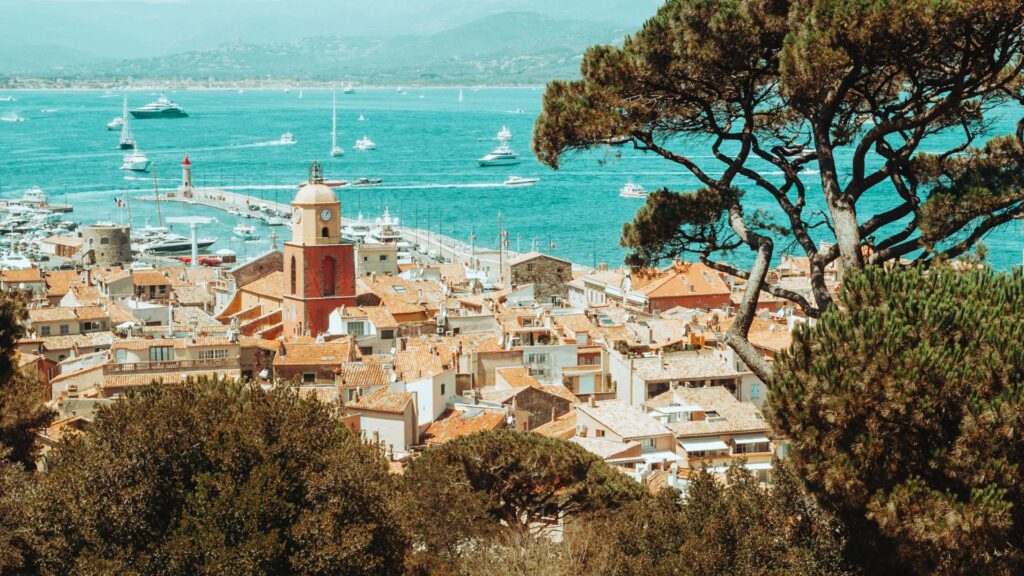
Offering the oldest and most reputable Citizenship by Investment program in the world, St. Kitts and Nevis is a twin-island nation known for its lush landscapes, pristine beaches, and rich history. Through its CBI program, investors gain citizenship through a donation or a real estate investment, unlocking visa-free travel to 145+ countries and valuable tax benefits.
Why the pedigree matters
As the first and longest-running CBI program, St. Kitts and Nevis has the most established due diligence framework, the deepest track record with international banks and immigration authorities, and the strongest reputation among Caribbean programs. For a buyer whose primary use case is banking access or mobility, the reputation of the issuing program matters: a St. Kitts passport is widely recognized and accepted, which is precisely the outcome most buyers are paying for.
The Investment Options
There are two principal routes to St. Kitts and Nevis citizenship, and they suit different buyers.
The donation route: US$250,000
The contribution route requires a US$250,000 donation to the government’s Sustainable Island State Contribution fund. This is a non-refundable contribution, not an investment that returns capital. In exchange, the applicant and qualifying family members receive citizenship. For most buyers whose goal is the passport itself rather than a real estate asset, the donation route is the cleaner and simpler path.
Practical example: a buyer whose objective is banking access and mobility, with no interest in owning Caribbean property, chooses the donation route. The US$250,000 is a cost, not a recoverable investment, but the process is simpler and faster than the real estate route, with no property to manage or eventually sell.
The real estate route: US$350,000
The real estate route requires a minimum US$350,000 investment in approved property. Unlike the donation, this is an asset the buyer owns and can eventually sell, subject to a mandatory holding period. The real estate route costs more upfront but produces a recoverable asset rather than a pure contribution.
Practical example: a buyer who wants both citizenship and a tangible Caribbean asset chooses the real estate route at US$350,000, holds the property through the required period, and may sell it later (to another CBI applicant, in many cases), partially recovering the capital. The trade-off is higher upfront cost and the responsibility of holding and maintaining the property.
What the Citizenship Delivers
The benefits are the reason St. Kitts and Nevis has remained the benchmark program for four decades.
- Application approval within 60 days through the Accelerated Application Process
- Visa-free or visa-on-arrival travel to 145+ countries, including the Schengen Area, the United Kingdom, Singapore, and Hong Kong
- Inclusion of dependent children and parents in the application
- No taxation on worldwide income
- No physical residency requirements and no need to travel to St. Kitts and Nevis during the application process
- Citizenship for life, inheritable by children and future descendants
- Full citizenship rather than a renewable residence permit
The tax dimension
St. Kitts and Nevis does not tax worldwide income, capital gains, or inheritance. For a buyer who establishes genuine tax residency in St. Kitts and Nevis, this is a significant advantage. The important caveat that applies to every citizenship program: citizenship alone does not change your tax residency. You must physically and legally establish tax residency to access the tax benefits, and anyone taxed on worldwide income by their home country, including US citizens, retains those obligations regardless of a second citizenship.
The passport opens the door to favorable tax positioning; it does not automatically deliver it. Cross-border tax planning should precede any decision.
Who Qualifies
St. Kitts and Nevis maintains rigorous due diligence as the foundation of its reputation. Beyond meeting one of the investment options, applicants must satisfy character and background requirements.
The core requirements
- Have a high personal net worth
- Be of outstanding character
- Hold no criminal record
- Pass comprehensive due diligence including source of funds verification, criminal background checks across jurisdictions, and international compliance screening
The due diligence is rigorous by design. St. Kitts and Nevis built its reputation on the integrity of its applicant pool, and the program protects that reputation through thorough vetting. This is a feature, not an obstacle: the strength of the due diligence is precisely what makes the passport widely accepted by banks and immigration authorities. A clean, well-documented application is essential, and pre-screening before any formal filing is the most effective way to identify and address any issues before non-refundable fees are committed.
How the Process Works
The St. Kitts and Nevis application follows a clear, established sequence refined over four decades.
First, a preliminary KYC check establishes initial eligibility before the full application is assembled.
Second, signing of the client engagement and payment of initial advisory and processing fees.
Third, collection of documents and payment of processing fees: the full documentation package establishing identity, source of funds, and background.
Fourth, submission of the file to the immigration unit, which conducts the comprehensive due diligence review.
Fifth, official approval for citizenship, granted after due diligence is satisfactorily completed.
Sixth, payment of the investment amount: the donation or the real estate purchase is completed at this stage, after approval.
Seventh, passports are issued for all qualifying family members.
Standard processing runs five to eight months. The Accelerated Application Process can deliver approval in as little as 60 days for an additional fee, which suits buyers with genuine urgency, such as a banking deadline or a business need.
The Regulatory Context in 2026
St. Kitts and Nevis operates within the broader Caribbean CBI environment, which is under more scrutiny in 2026 than at any point in its history. Buyers should understand the pressures.
The regional reforms
In July 2024, the five Eastern Caribbean CBI nations agreed a regional Memorandum of Agreement raising minimum contributions to a US$200,000 floor and harmonizing standards. St. Kitts and Nevis sits at US$250,000 on the donation route, above the regional floor, consistent with its positioning as the premium, most-established program. The five nations are launching the Eastern Caribbean Citizenship by Investment Regulatory Authority (ECCIRA) in 2026 to harmonize due diligence and oversight, alongside a Continuing International Due Diligence framework that monitors citizens even after issuance.
These reforms are, on balance, positive for the integrity and longevity of the St. Kitts program. Stronger oversight protects the reputation that makes the passport valuable. But they also mean the program is more rigorous and more closely watched than in earlier years.
The EU Schengen question
The most significant external pressure concerns visa-free access to Europe. In December 2025, the European Commission signaled a harder line on visa-free travel for citizenship-by-investment countries, and the European Parliament has advanced measures targeting CBI visa-free access. Vanuatu’s CBI passport already lost full Schengen access in 2024 as a precedent.
This does not make St. Kitts citizenship worthless, far from it. Even in a worst-case Schengen scenario, holders retain citizenship for life and visa-free access to roughly 130 to 140 other destinations including the UK, Singapore, and Hong Kong. But anyone buying St. Kitts citizenship in 2026 specifically for European travel should understand this risk explicitly, and weigh whether their primary use case (banking, mobility outside Europe, tax positioning, family optionality) is exposed to it or not. For most St. Kitts buyers, whose use case is banking access and global mobility rather than Europe specifically, the Schengen question is a manageable risk rather than a dealbreaker.

Who St. Kitts and Nevis Fits
The program suits a specific and common HNWI profile.
It fits you if:
- You want a full second citizenship and passport, not a renewable residence permit
- You need it in months, with a 60-day accelerated option for genuine urgency
- Your primary use case is banking access, global mobility, or family optionality
- You have no intention of relocating and value the absence of any stay requirement
- You want a passport from the most established and reputable Caribbean program
- You want citizenship that is inheritable by your children and future descendants
- Your European travel needs are secondary, or you accept the Schengen regulatory risk
A different program fits you better if:
- Your primary goal is EU citizenship, in which case an EU Golden Visa or the France Talent Passport is the route
- You specifically need US business access, in which case Grenada’s E-2 Investor Visa Treaty is the better Caribbean choice
- Your primary goal is unrestricted European travel, given the 2026 Schengen regulatory risk on Caribbean passports
- You want the absolute lowest entry cost, in which case Dominica at US$200,000 is lower, though less established
Frequently Asked Questions
How fast can I actually get St. Kitts citizenship?
Standard processing runs five to eight months from filing to passport. The Accelerated Application Process can deliver approval in as little as 60 days for an additional fee. Add three to four weeks of document preparation before the clock starts. The 60-day route is genuinely fast by any standard and suits buyers with a real deadline, such as a banking requirement or a business need.
Do I have to live in or visit St. Kitts and Nevis?
No. There is no physical residency requirement and no need to travel to St. Kitts and Nevis during the application process. The citizenship is granted without relocation, without a minimum stay, and without any language or integration requirement. This is one of the program’s defining advantages over residency-based European programs.
Is the US$250,000 donation refundable?
No. The donation to the Sustainable Island State Contribution fund is a non-refundable contribution, not a recoverable investment. If you want a recoverable asset, the real estate route at US$350,000 produces property you own and can eventually sell after the mandatory holding period, though at a higher upfront cost. The donation route is simpler and faster; the real estate route preserves capital in an asset.
Will St. Kitts citizenship give me visa-free travel to Europe?
Currently, yes: St. Kitts passports provide visa-free or visa-on-arrival access to 145+ countries including the Schengen Area. However, the EU has signaled a harder line on visa-free access for citizenship-by-investment countries in 2026, and this is a genuine risk to monitor. Even in a worst-case scenario, the passport retains visa-free access to roughly 130 to 140 other destinations including the UK, Singapore, and Hong Kong. Buyers whose primary need is European travel specifically should weigh this risk carefully; buyers whose need is banking and global mobility are far less exposed.
Can I include my family?
Yes. The application includes dependent children and parents. St. Kitts and Nevis allows the inclusion of a range of dependents, and family members receive their own passports. Adding family members increases the government and due diligence fees, but the structure is designed to secure citizenship for the whole family in a single application, with the citizenship inheritable by future descendants.
How does St. Kitts compare to other Caribbean programs?
St. Kitts and Nevis is the oldest and most reputable, positioned as the premium Caribbean program at US$250,000 on the donation route, above the regional US$200,000 floor. Dominica is the lowest cost at US$200,000 but less established. Grenada, at US$235,000, is the only Caribbean program with a US E-2 Investor Visa Treaty and a China visa-waiver, making it the choice for buyers needing US or China business access specifically. St. Kitts is the choice for buyers who prioritize reputation, acceptance, and the strongest-established program.
What happens with the ECCIRA reforms in 2026?
The Eastern Caribbean Citizenship by Investment Regulatory Authority, launching in 2026, harmonizes due diligence and oversight across the five Caribbean programs, alongside continuing monitoring of citizens after issuance. For applicants, this means more rigorous vetting and stronger program integrity. On balance it is positive: it protects the reputation that makes the passport valuable. It also means a clean, well-documented application matters more than ever, which is why pre-screening before filing is strongly advisable.
The Honest Conclusion
St. Kitts and Nevis is the original, and four decades on, it remains the benchmark. For a buyer who wants a full second citizenship rather than a residence permit, processed in months with no relocation, from the most established and reputable Caribbean program, it is a strong and proven choice. The US$250,000 donation route is clean and fast; the US$350,000 real estate route preserves capital in an asset.
The honest caveats are two. First, the donation is a cost, not a recoverable investment, so the buyer should be clear about which route fits their objective. Second, the 2026 EU Schengen regulatory pressure is real, and any buyer whose primary use case is European travel should weigh it explicitly. For the far more common St. Kitts buyer, whose use case is banking access, global mobility, tax positioning, and family optionality, the program remains one of the most reliable instruments available.

Your Next Step
Soland’s Pre-Qualification engagement evaluates whether St. Kitts and Nevis fits your specific objective, which route (donation or real estate) suits your situation, and runs the kind of pre-screening that identifies any due diligence issues before non-refundable fees are committed. We also compare St. Kitts against the other Caribbean programs for your specific use case, since Grenada, Dominica, or Antigua may fit better depending on your needs.
If St. Kitts is the right fit, we build the cleanest possible application for the most established program in the industry. If another program serves you better, we tell you that first. Soland does not sell passports. We help families build the right cross-border structure for the next twenty years. Get in touch through solandworld.com or contact our advisory team directly.

